Aquarium animals
Planet Zoo 2 Aquatic Animals and Sharks
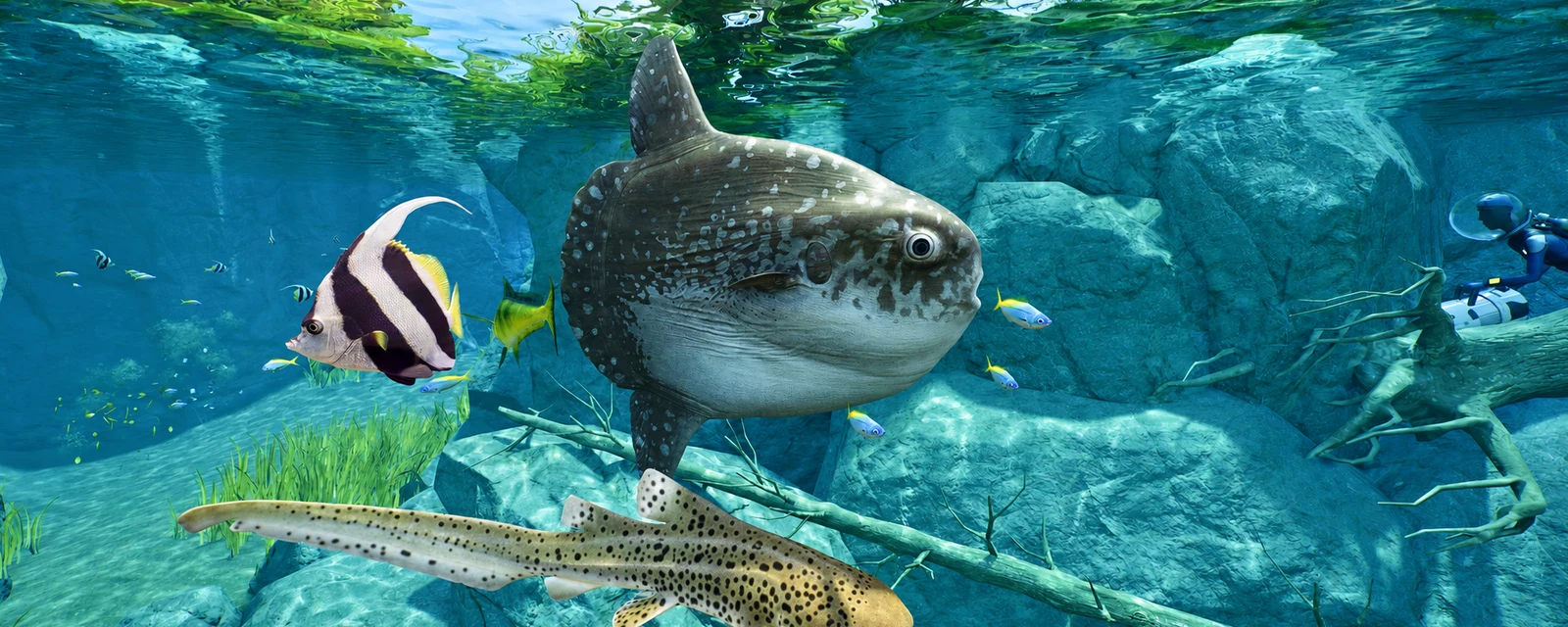
Planet Zoo 2 has 37 aquarium animals on the official Zoopedia as of November 22, 2026: 29 ray-finned fish, four sharks, two rays and the Hawksbill Turtle and West Indian Manatee.
Last updated Game version: Launch version (October 13, 2026)
Quick answer: aquarium, habitat or exhibit?
- Semi-aquatic: 18 of the 69 habitat and aviary animals need water in a normal habitat, not an aquarium. The African Penguin, Asian Small-Clawed Otter, Eurasian Beaver, Gharial and Saltwater Crocodile need deep water to swim; the other 13 need a water area, the Common Hippopotamus as much as land. The full list
- Sea lions: No. The official Zoopedia has no sea lion, seal or walrus as of November 22, 2026; the first Planet Zoo's California Sea Lion and Grey Seal did not return. The West Indian Manatee is the one mammal that lives in an aquarium, and the African Penguin and Asian Small-Clawed Otter swim in deep water in a land habitat.
- Exhibit fish (16): African Tigerfish, Blue and Gold Fusilier, Bluespine Unicornfish, Blunthead Cichlid, Boeseman's Rainbowfish, Brown Trout, Clown Anemonefish, Clown Loach, Common Rudd, Giant Gourami, Indo-Pacific Sergeant, Koi, Palette Surgeonfish, Schooling Bannerfish, Threespot Damselfish and Yellow Tang can live in an exhibit or an aquarium. More on exhibit fish
- Aquarium only (21): every shark and ray, the Hawksbill Turtle and West Indian Manatee and the other 13 fish need an aquarium.
- Career goal, 6 Aquatic Habitat species: it counts different species, not animals, so a second animal of one species adds nothing. Build it from the 16 aquarium animals kept one by one, such as the Blackspotted Puffer, Blacktip Reef Shark and Clown Triggerfish; shoals have goals of their own. Which ones count
All Planet Zoo 2 aquarium animals
Filter the 37 aquarium animals by biome, ocean or river region, group, conservation status or edition. The same cards are part of the full Planet Zoo 2 animal list, and the animals you tick as in your zoo are ticked there too.
Showing 37 of 37 aquarium animals.
AquariumExhibit
African Tigerfish
Hydrocynus vittatus
Least Concern
- Biome
- Lakes and Rivers
- Found in
- Africa
- Class
- Ray-finned fish (Actinopterygii)
Aquarium
Blackspotted Puffer
Arothron nigropunctatus
Least Concern
- Biome
- Reef
- Found in
- Indian Ocean, Pacific Ocean
- Class
- Ray-finned fish (Actinopterygii)
Aquarium
Blacktip Reef Shark
Carcharhinus melanopterus
Vulnerable
- Biome
- Estuarine, Mangrove, Reef
- Found in
- Indian Ocean, Pacific Ocean
- Class
- Shark or ray (Chondrichthyes)
AquariumExhibitDeluxe Edition
Blue and Gold Fusilier
Caesio teres
Least Concern
- Biome
- Reef
- Found in
- Indian Ocean, Pacific Ocean
- Class
- Ray-finned fish (Actinopterygii)
AquariumExhibit
Bluespine Unicornfish
Naso unicornis
Least Concern
- Biome
- Reef
- Found in
- Indian Ocean, Pacific Ocean
- Class
- Ray-finned fish (Actinopterygii)
AquariumExhibit
Blunthead Cichlid
Tropheus moorii
Least Concern
- Biome
- Lakes and Rivers
- Found in
- Africa
- Class
- Ray-finned fish (Actinopterygii)
AquariumExhibit
Boeseman's Rainbowfish
Melanotaenia boesemani
Endangered
- Biome
- Lakes and Rivers
- Found in
- Oceania
- Class
- Ray-finned fish (Actinopterygii)
AquariumExhibit
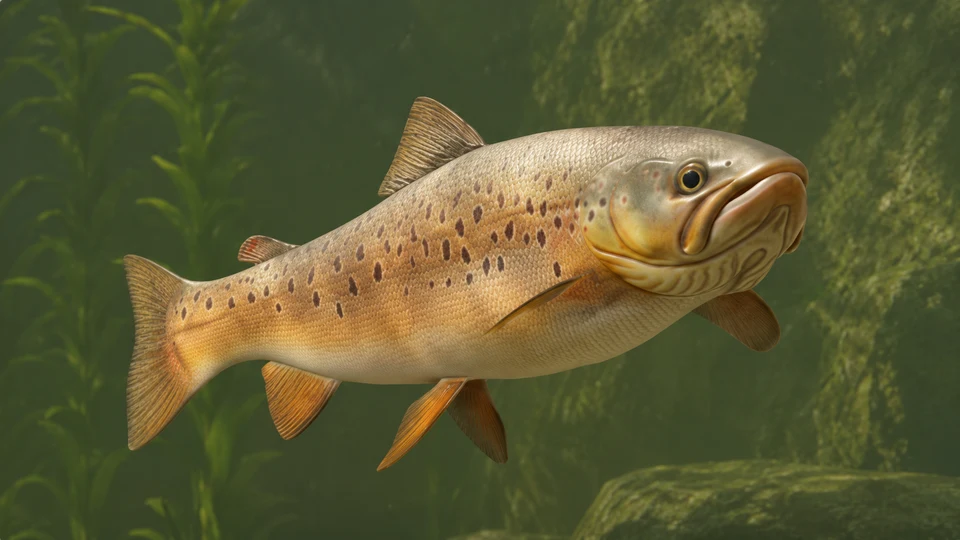
Brown Trout
Salmo trutta
Least Concern
- Biome
- Lakes and Rivers
- Found in
- Europe
- Class
- Ray-finned fish (Actinopterygii)
AquariumExhibit
Clown Anemonefish
Amphiprion ocellaris
Least Concern
- Biome
- Reef
- Found in
- Indian Ocean, Pacific Ocean
- Class
- Ray-finned fish (Actinopterygii)
AquariumExhibit
Clown Loach
Chromobotia macracanthus
Least Concern
- Biome
- Lakes and Rivers
- Found in
- Asia
- Class
- Ray-finned fish (Actinopterygii)
Aquarium
Clown Triggerfish
Balistoides conspicillum
Least Concern
- Biome
- Reef
- Found in
- Indian Ocean, Pacific Ocean
- Class
- Ray-finned fish (Actinopterygii)
AquariumExhibit
Common Rudd
Scardinius erythrophthalmus
Least Concern
- Biome
- Lakes and Rivers
- Found in
- Asia, Europe
- Class
- Ray-finned fish (Actinopterygii)
Aquarium
Dolphinfish
Coryphaena hippurus
Least Concern
- Biome
- Open Sea
- Found in
- Atlantic Ocean, Indian Ocean, Pacific Ocean
- Class
- Ray-finned fish (Actinopterygii)
AquariumExhibit
Giant Gourami
Osphronemus goramy
Least Concern
- Biome
- Lakes and Rivers
- Found in
- Asia
- Class
- Ray-finned fish (Actinopterygii)
Aquarium
Giant Grouper
Epinephelus lanceolatus
Data Deficient
- Biome
- Estuarine, Mangrove, Reef
- Found in
- Indian Ocean, Pacific Ocean
- Class
- Ray-finned fish (Actinopterygii)
Aquarium
Golden Trevally
Gnathanodon speciosus
Least Concern
- Biome
- Estuarine, Reef
- Found in
- Indian Ocean, Pacific Ocean
- Class
- Ray-finned fish (Actinopterygii)
AquariumDeluxe Edition
Great Hammerhead
Sphyrna mokarran
Critically Endangered
- Biome
- Open Sea, Reef
- Found in
- Atlantic Ocean, Indian Ocean, Pacific Ocean
- Class
- Shark or ray (Chondrichthyes)
Aquarium
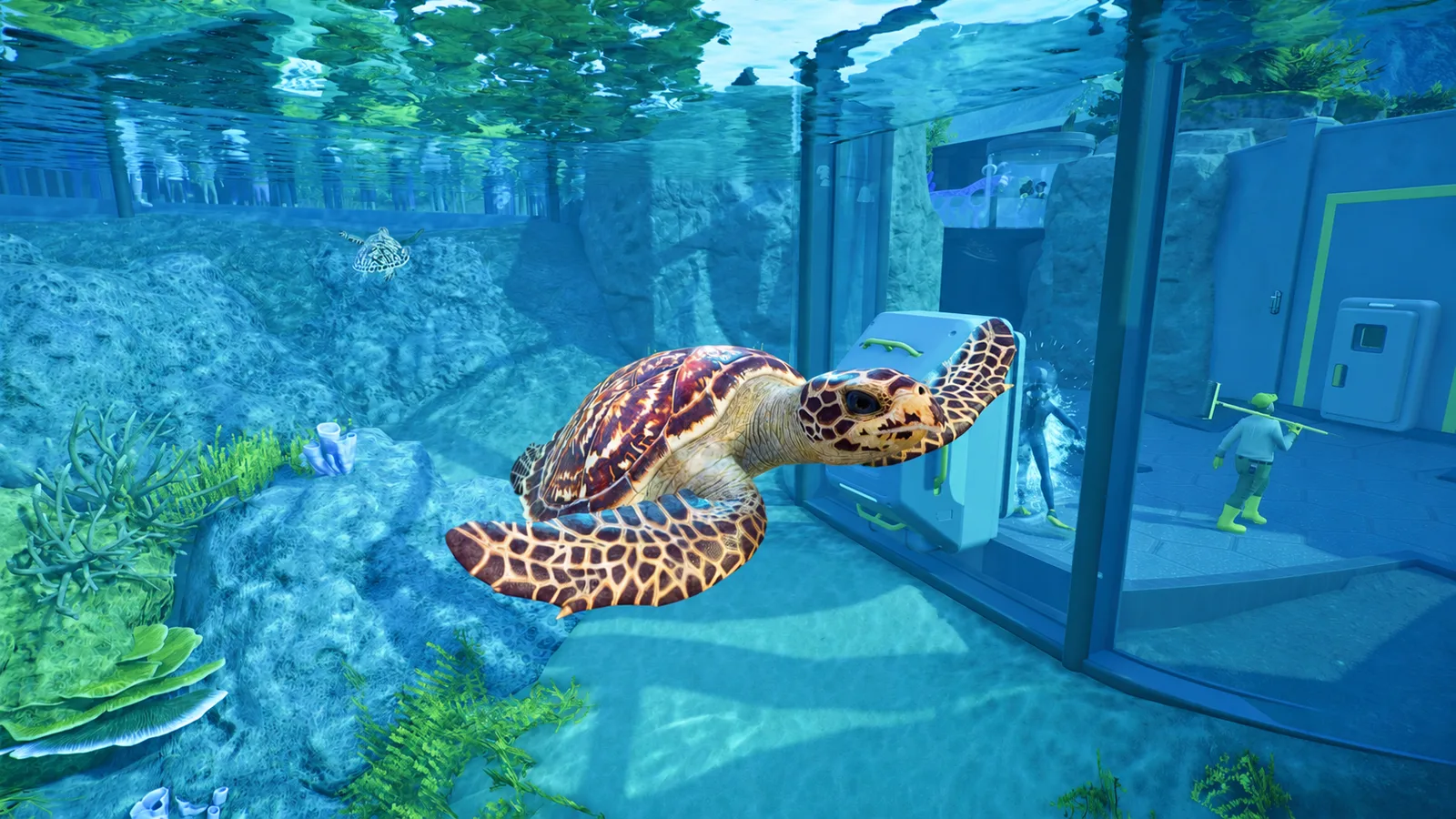
Hawksbill Turtle
Eretmochelys imbricata
Critically Endangered
- Biome
- Estuarine, Mangrove, Open Sea, Reef
- Found in
- Africa, Asia, Atlantic Ocean, Oceania, Europe, Indian Ocean, North America, Pacific Ocean, South America
- Class
- Reptile (Reptilia)
Aquarium
Humphead Wrasse
Cheilinus undulatus
Endangered
- Biome
- Open Sea, Reef
- Found in
- Indian Ocean, Pacific Ocean
- Class
- Ray-finned fish (Actinopterygii)
Aquarium
Indian Ocean Oriental Sweetlips
Plectorhinchus vittatus
Least Concern
- Biome
- Estuarine, Reef
- Found in
- Indian Ocean, Pacific Ocean
- Class
- Ray-finned fish (Actinopterygii)
Aquarium
Indo-Pacific Leopard Shark
Stegostoma tigrinum
Endangered
- Biome
- Estuarine, Mangrove, Open Sea, Reef
- Found in
- Indian Ocean, Pacific Ocean
- Class
- Shark or ray (Chondrichthyes)
AquariumExhibit
Indo-Pacific Sergeant
Abudefduf vaigiensis
Least Concern
- Biome
- Open Sea, Reef
- Found in
- Indian Ocean, Pacific Ocean
- Class
- Ray-finned fish (Actinopterygii)
Aquarium
Javanese Cownose Ray
Rhinoptera javanica
Endangered
- Biome
- Estuarine, Open Sea, Reef
- Found in
- Indian Ocean, Pacific Ocean
- Class
- Shark or ray (Chondrichthyes)
AquariumExhibit
Koi
Cyprinus sp.
Domesticated
- Biome
- Lakes and Rivers
- Found in
- Asia, Europe
- Class
- Ray-finned fish (Actinopterygii)
AquariumDeluxe Edition
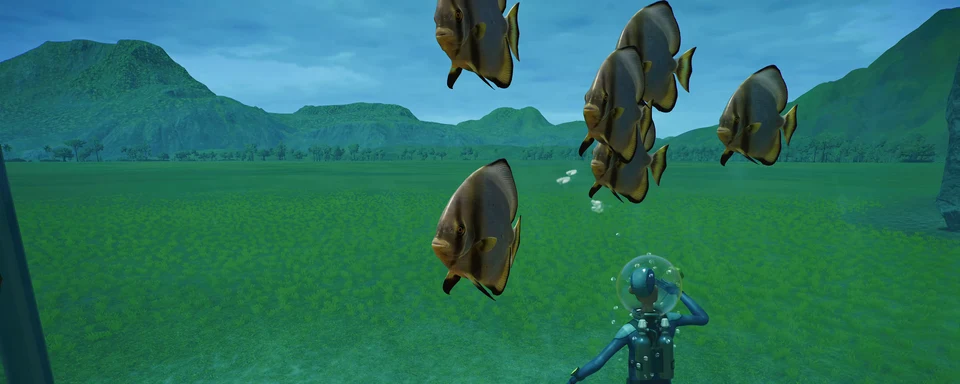
Longfin Batfish
Platax pinnatus
Least Concern
- Biome
- Reef
- Found in
- Indian Ocean, Pacific Ocean
- Class
- Ray-finned fish (Actinopterygii)
Aquarium
Ocean Sunfish
Mola mola
Vulnerable
- Biome
- Open Sea
- Found in
- Indian Ocean, Pacific Ocean
- Class
- Ray-finned fish (Actinopterygii)
Aquarium
Ocellated Eagle Ray
Aetobatus ocellatus
Endangered
- Biome
- Estuarine, Open Sea, Reef
- Found in
- Indian Ocean, Pacific Ocean
- Class
- Shark or ray (Chondrichthyes)
Aquarium
Pacific Bluefin Tuna
Thunnus orientalis
Near Threatened
- Biome
- Open Sea
- Found in
- Pacific Ocean
- Class
- Ray-finned fish (Actinopterygii)
Aquarium
Pacific Sardine
Sardinops sagax
Least Concern
- Biome
- Open Sea
- Found in
- Indian Ocean, Pacific Ocean
- Class
- Ray-finned fish (Actinopterygii)
AquariumExhibit
Palette Surgeonfish
Paracanthurus hepatus
Least Concern
- Biome
- Reef
- Found in
- Indian Ocean, Pacific Ocean
- Class
- Ray-finned fish (Actinopterygii)
Aquarium
Red Lionfish
Pterois volitans
Least Concern
- Biome
- Estuarine, Reef
- Found in
- Indian Ocean, Pacific Ocean
- Class
- Ray-finned fish (Actinopterygii)
Aquarium
Sailfin Snapper
Symphorichthys spilurus
Least Concern
- Biome
- Reef
- Found in
- Asia, Oceania
- Class
- Ray-finned fish (Actinopterygii)
Aquarium
Sand Tiger Shark
Carcharias taurus
Critically Endangered
- Biome
- Reef
- Found in
- Atlantic Ocean, Indian Ocean, Pacific Ocean
- Class
- Shark or ray (Chondrichthyes)
AquariumExhibit
Threespot Damselfish
Dascyllus trimaculatus
Least Concern
- Biome
- Mangrove, Reef
- Found in
- Indian Ocean, Pacific Ocean
- Class
- Ray-finned fish (Actinopterygii)
Aquarium
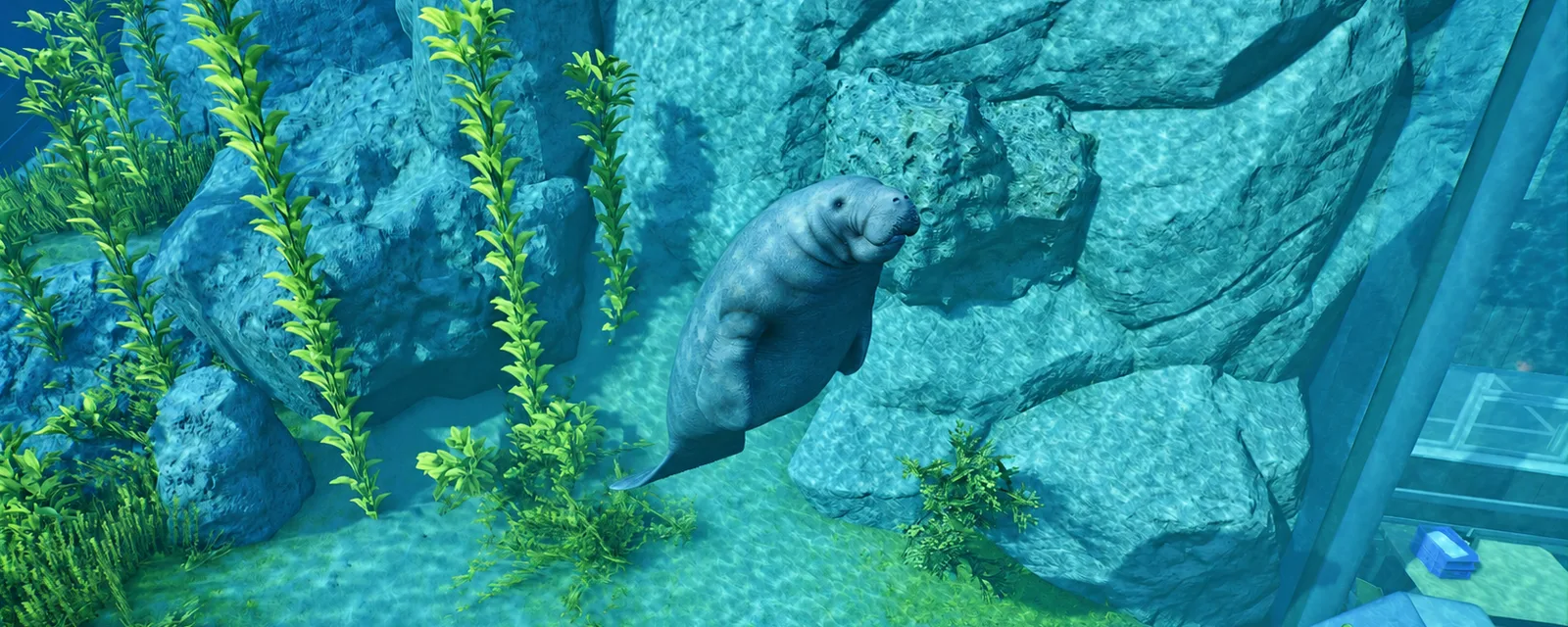
West Indian Manatee
Trichechus manatus
Vulnerable
- Biome
- Estuarine, Lakes and Rivers, Mangrove, Open Sea, Wetlands
- Found in
- North America, South America
- Class
- Mammal (Mammalia)
AquariumExhibit
Yellow Tang
Zebrasoma flavescens
Least Concern
- Biome
- Reef
- Found in
- Pacific Ocean
- Class
- Ray-finned fish (Actinopterygii)
Sharks and rays
- Blacktip Reef Shark (Carcharhinus melanopterus): salt water, 22°C to 28°C, 210m² of deep water for one
- Great Hammerhead (Deluxe content) (Sphyrna mokarran): salt water, 20°C to 28°C, 960m² of deep water for one
- Indo-Pacific Leopard Shark (Stegostoma tigrinum): salt water, 24°C to 29°C, 36m² of deep water for one
- Sand Tiger Shark (Carcharias taurus): salt water, 16°C to 28°C, 420m² of deep water for one
- Javanese Cownose Ray (Rhinoptera javanica): brackish or salt water, 24°C to 30°C, 80m² of deep water for one
- Ocellated Eagle Ray (Aetobatus ocellatus): salt water, 24°C to 27°C, 180m² of deep water for one
The Great Hammerhead is one of the six Deluxe Edition animals; the other sharks come with the base game. There is no great white shark on the Zoopedia at the launch-day check.
Six of these sharks and rays have life cycle values in our breeding calculator, which works out how many young a few females can have over the years.
Which animals count as Aquatic Habitat species
Career goals count Aquatic Habitat species: the Nordic Fjords scenario asks for 6 different ones for its later medals, and the Maluku Islands scenario asks for 10 and then 15. The goal counts species, not animals, so a second Great Hammerhead adds nothing. Maluku also has separate goals for shoals and shoal species, so the game tracks shoals apart: build the Aquatic Habitat count from aquarium animals you keep one by one.
Kept one by one (16): the Blackspotted Puffer, Blacktip Reef Shark, Clown Triggerfish, Dolphinfish, Giant Grouper, Great Hammerhead, Hawksbill Turtle, Humphead Wrasse, Indo-Pacific Leopard Shark, Javanese Cownose Ray, Ocean Sunfish, Ocellated Eagle Ray, Red Lionfish, Sailfin Snapper, Sand Tiger Shark and West Indian Manatee. Their official panels give separate ranges for males and females, and every one of them accepts salt water, so a few saltwater tanks cover six species.
Shoal fish (21): the African Tigerfish, Blue and Gold Fusilier, Bluespine Unicornfish, Blunthead Cichlid, Boeseman's Rainbowfish, Brown Trout, Clown Anemonefish, Clown Loach, Common Rudd, Giant Gourami, Golden Trevally, Indian Ocean Oriental Sweetlips, Indo-Pacific Sergeant, Koi, Longfin Batfish, Pacific Bluefin Tuna, Pacific Sardine, Palette Surgeonfish, Schooling Bannerfish, Threespot Damselfish and Yellow Tang. Their panels give one group range and no sexes. They count toward shoal goals, grow as a group instead of breeding in pairs, and have no Genetics to manage. Which of them can share one tank, and what a shoal's panel shows, is on the Planet Zoo 2 shoals page.
How aquariums work in Planet Zoo 2
Aquariums are a habitat type of their own, new in Planet Zoo 2. From Frontier's aquarium feature:
- Building: you put up barriers as for a land habitat, choosing their size, direction and height, then add an aquarium staff gate and connect it to your paths so keepers can reach the animals. Ready-made aquarium blueprints are available too. Every step, from filling the tank to heating it, is in our Planet Zoo 2 aquarium guide. If animals will not move in, see our Planet Zoo 2 No path to destination checklist.
- Space: for aquatic animals, space means the volume of water in the aquarium.
- Salinity: a network of water filters feeds each aquarium and can be set for fresh water, salt water or brackish water. A saltwater species cannot survive in fresh water, so the water has to match the animal. Our Planet Zoo 2 water filtration guide shows how to build the network and set it.
- Temperature and light: each species has a preferred water temperature, which you set at the aquarium's staff gate, along with the lighting.
- Cleaning: dirty water makes the animals harder for guests to see and raises the risk of disease. Keepers dive in to clean the glass, and aquariums need maintenance against leaks; some barrier types resist cracks better than others. Sick aquarium animals need a Vet and a spell in quarantine.
- Guests: a guest gate lets you run a tunnel through the water, and the glass can be one-way, curved inwards or outwards. Aquariums can also span several floors or sit underground. Which aquarium animals allow a walk-through tunnel is on the Planet Zoo 2 walkthrough animals list.
The table below gives each species' water area, temperature and water type, and the Zoopedia guide explains how to read the official Habitat panels. The ground counts as well: the Planet Zoo 2 terrain requirements page lists the share of sand, soil and rock each aquarium animal accepts. Biomes help you explore the roster but do not establish compatibility: the aquarium animals come from six of them, Estuarine (10), Lakes and Rivers (9), Mangrove (6), Open Sea (12), Reef (24) and Wetlands (1). The Planet Zoo 2 biomes page lists every animal of each biome.
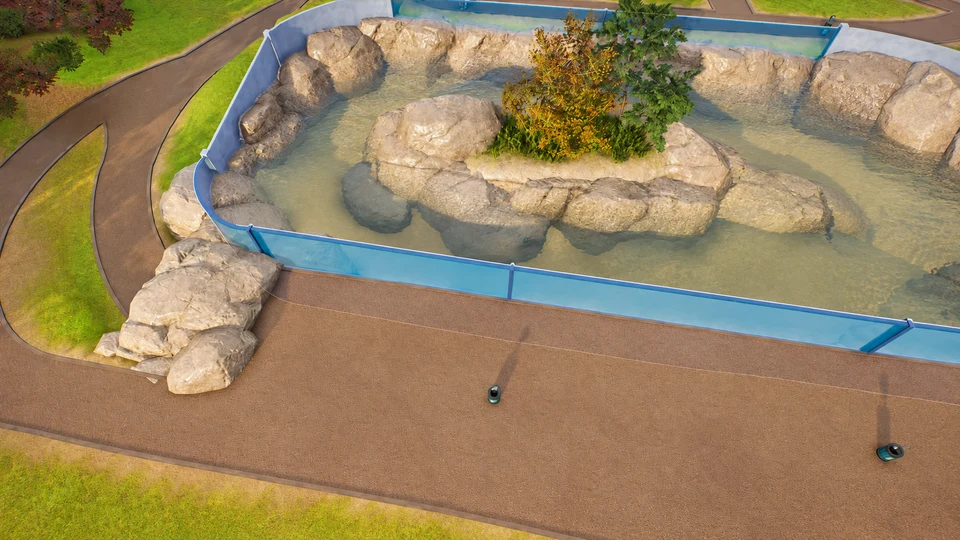
Water area, temperature and water type for every aquarium animal
These are the values on each animal's official Zoopedia panel, checked November 9, 2026. The area is for one animal, and each extra animal adds the amount in brackets; we read the official control at every count up to 500. Set the water type with the aquarium's water filters and the temperature at its staff gate. To plan several species in one aquarium, use the Planet Zoo 2 habitat planner.
| Animal | Group size | Area, 1 animal (+ each extra) | Temperature | Water |
|---|---|---|---|---|
| African Tigerfish | 1–5 | Deep water area 100 m² (+30 m² each) | 22°C to 30°C | Freshwater |
| Blackspotted Puffer | 1–4 | Deep water area 16 m² (+40 m² each) | 23°C to 27°C | Saltwater |
| Blacktip Reef Shark | 1–10 | Deep water area 210 m² (+105 m² each) | 22°C to 28°C | Saltwater |
| Blue and Gold Fusilier | 1–4 | Deep water area 50 m² (+15 m² each) | 21°C to 31°C | Saltwater |
| Bluespine Unicornfish | 1–5 | Deep water area 50 m² (+15 m² each) | 24°C to 29°C | Saltwater |
| Blunthead Cichlid | 1–5 | Deep water area 50 m² (+15 m² each) | 24°C to 27°C | Freshwater |
| Boeseman's Rainbowfish | 1–4 | Deep water area 50 m² (+15 m² each) | 25°C to 28°C | Freshwater |
| Brown Trout | 1–5 | Deep water area 50 m² (+15 m² each) | 12°C to 19°C | Freshwater |
| Clown Anemonefish | 1–5 | Deep water area 50 m² (+15 m² each) | 24°C to 28°C | Saltwater |
| Clown Loach | 1–5 | Deep water area 100 m² (+30 m² each) | 25°C to 30°C | Freshwater |
| Clown Triggerfish | 1–2 | Deep water area 16 m² (+16 m² each) | 23°C to 30°C | Saltwater |
| Common Rudd | 1–4 | Deep water area 50 m² (+15 m² each) | 18°C to 24°C | Freshwater |
| Dolphinfish | 1–4 | Deep water area 400 m² (+50 m² each) | 24°C to 28°C | Saltwater |
| Giant Gourami | 1–5 | Deep water area 100 m² (+30 m² each) | 24°C to 28°C | Freshwater, Brackish |
| Giant Grouper | 1–5 | Deep water area 150 m² (+150 m² each) | 24°C to 29°C | Brackish, Saltwater |
| Golden Trevally | 1–5 | Deep water area 100 m² (+30 m² each) | 24°C to 30°C | Saltwater |
| Great Hammerhead | 1–2 | Deep water area 960 m² (+240 m² each) | 20°C to 28°C | Saltwater |
| Hawksbill Turtle | 1–4 | Deep water area 100 m² (+25 m² each) | 22°C to 30°C | Brackish, Saltwater |
| Humphead Wrasse | 1–10 | Deep water area 60 m² (+12.5 m² each) | 22°C to 30°C | Saltwater |
| Indian Ocean Oriental Sweetlips | 1–5 | Deep water area 100 m² (+30 m² each) | 24°C to 28°C | Saltwater |
| Indo-Pacific Leopard Shark | 1–20 | Deep water area 36 m² (+18 m² each) | 24°C to 29°C | Saltwater |
| Indo-Pacific Sergeant | 1–4 | Deep water area 50 m² (+15 m² each) | 24°C to 28°C | Saltwater |
| Javanese Cownose Ray | 5–40 | Deep water area 80 m² (+15 m² each) | 24°C to 30°C | Brackish, Saltwater |
| Koi | 1–5 | Deep water area 50 m² (+15 m² each) | 18°C to 25°C | Freshwater |
| Longfin Batfish | 1–5 | Deep water area 100 m² (+30 m² each) | 22°C to 28°C | Saltwater |
| Ocean Sunfish | 1–3 | Deep water area 300 m² (+200 m² each) | 10°C to 25°C | Saltwater |
| Ocellated Eagle Ray | 1–16 | Deep water area 180 m² (+45 m² each) | 24°C to 27°C | Saltwater |
| Pacific Bluefin Tuna | 1–5 | Deep water area 200 m² (+60 m² each) | 17°C to 26°C | Saltwater |
| Pacific Sardine | 1–3 | Deep water area 50 m² (+15 m² each) | 15°C to 26°C | Brackish, Saltwater |
| Palette Surgeonfish | 1–5 | Deep water area 50 m² (+15 m² each) | 23°C to 28°C | Saltwater |
| Red Lionfish | 1–20 | Deep water area 16 m² (+16 m² each) | 22°C to 28°C | Saltwater |
| Sailfin Snapper | 1–10 | Deep water area 40 m² (+40 m² each) | 22°C to 29°C | Saltwater |
| Sand Tiger Shark | 2–6 | Deep water area 420 m² (+240 m² each) | 16°C to 28°C | Saltwater |
| Schooling Bannerfish | 1–4 | Deep water area 50 m² (+15 m² each) | 24°C to 28°C | Saltwater |
| Threespot Damselfish | 1–5 | Deep water area 50 m² (+15 m² each) | 24°C to 28°C | Saltwater |
| West Indian Manatee | 1–8 | Deep water area 20 m² (+5 m² each); Aquatic area 150 m² (+25 m² each) | 23°C to 30°C | Any Salinity |
| Yellow Tang | 1–4 | Deep water area 50 m² (+15 m² each) | 24°C to 28°C | Saltwater |
Freshwater, brackish and saltwater aquarium animals
Each animal's Zoopedia panel lists the water it accepts, and every animal sharing an aquarium needs a water type they all accept. The saltwater list is the game's marine animals: reef and open-sea fish, the sharks and rays, the Hawksbill Turtle and the West Indian Manatee.
Freshwater (9): the African Tigerfish, Blunthead Cichlid, Boeseman's Rainbowfish, Brown Trout, Clown Loach, Common Rudd, Giant Gourami, Koi and West Indian Manatee.
Brackish (6): the Giant Gourami, Giant Grouper, Hawksbill Turtle, Javanese Cownose Ray, Pacific Sardine and West Indian Manatee.
Saltwater (29): the Blackspotted Puffer, Blacktip Reef Shark, Blue and Gold Fusilier, Bluespine Unicornfish, Clown Anemonefish, Clown Triggerfish, Dolphinfish, Giant Grouper, Golden Trevally, Great Hammerhead, Hawksbill Turtle, Humphead Wrasse, Indian Ocean Oriental Sweetlips, Indo-Pacific Leopard Shark, Indo-Pacific Sergeant, Javanese Cownose Ray, Longfin Batfish, Ocean Sunfish, Ocellated Eagle Ray, Pacific Bluefin Tuna, Pacific Sardine, Palette Surgeonfish, Red Lionfish, Sailfin Snapper, Sand Tiger Shark, Schooling Bannerfish, Threespot Damselfish, West Indian Manatee and Yellow Tang.
Six animals are on more than one list: the Giant Gourami (fresh or brackish water), the Giant Grouper (brackish or salt water), the Hawksbill Turtle (brackish or salt water), the Javanese Cownose Ray (brackish or salt water), the Pacific Sardine (brackish or salt water) and the West Indian Manatee (fresh, brackish or salt water). The habitat planner checks the water type for a mix of species.
Fish that also fit an exhibit
16 smaller fish are listed for both an aquarium and an exhibit, so you can show them in either: the African Tigerfish, Blue and Gold Fusilier, Bluespine Unicornfish, Blunthead Cichlid, Boeseman's Rainbowfish, Brown Trout, Clown Anemonefish, Clown Loach, Common Rudd, Giant Gourami, Indo-Pacific Sergeant, Koi, Palette Surgeonfish, Schooling Bannerfish, Threespot Damselfish and Yellow Tang. They also appear in the exhibit animals list.
Three of the six Planet Zoo 2 Deluxe Edition animals live in an aquarium: the Blue and Gold Fusilier, Great Hammerhead and Longfin Batfish.
Water animals that are not aquarium animals
Many animals swim but still live in a normal habitat, with a pool for their water area, not in an aquarium. Frontier's Animals guide calls them semi-aquatic. Of the 69 habitat and aviary animals, 18 ask for water area in their habitat: the African Penguin, African Savannah Elephant, Asian Elephant, Asian Small-Clawed Otter, Cape Buffalo, Common Hippopotamus, Eurasian Beaver, Eurasian Bittern, Eurasian Brown Bear, Gharial, Greater Flamingo, Grizzly Bear, Komodo Dragon, Malayan Tapir, Nile Monitor, Saltwater Crocodile, Sumatran Tiger and Sun Bear. The Planet Zoo 2 habitat planner gives the land and water area each one needs for your group size.
No dolphins or whales
Frontier's FAQ says Planet Zoo 2 has no cetaceans. It wants each species in the game to have an environment that suits it, and it is watching how conservation work on dolphins, whales and porpoises develops. The West Indian Manatee is the one aquatic mammal on the Zoopedia.
Planet Zoo 2 aquatic animal questions
What semi-aquatic animals are in Planet Zoo 2?
18 of the 69 habitat and aviary animals need water in a normal habitat, not an aquarium. The African Penguin, Asian Small-Clawed Otter, Eurasian Beaver, Gharial and Saltwater Crocodile need deep water to swim; the other 13 need a water area, the Common Hippopotamus as much as land. The full list is the African Penguin, African Savannah Elephant, Asian Elephant, Asian Small-Clawed Otter, Cape Buffalo, Common Hippopotamus, Eurasian Beaver, Eurasian Bittern, Eurasian Brown Bear, Gharial, Greater Flamingo, Grizzly Bear, Komodo Dragon, Malayan Tapir, Nile Monitor, Saltwater Crocodile, Sumatran Tiger and Sun Bear.
Are there sea lions in Planet Zoo 2?
No. The official Zoopedia has no sea lion, seal or walrus as of November 22, 2026; the first Planet Zoo's California Sea Lion and Grey Seal did not return. The West Indian Manatee is the one mammal that lives in an aquarium, and the African Penguin and Asian Small-Clawed Otter swim in deep water in a land habitat.
How many aquatic animals are in Planet Zoo 2?
The official Zoopedia lists 37 aquarium animals as of November 22, 2026: 29 ray-finned fish, four sharks, two rays, the Hawksbill Turtle and West Indian Manatee.
What sharks are in Planet Zoo 2?
Four: the Blacktip Reef Shark, Great Hammerhead (Deluxe content), Indo-Pacific Leopard Shark and Sand Tiger Shark. The Javanese Cownose Ray and Ocellated Eagle Ray are the only rays on the Zoopedia so far.
Can you have a great white shark in Planet Zoo 2?
Not as of November 22, 2026: the great white shark is not on the official Zoopedia at the launch-day check.
Are there dolphins in Planet Zoo 2?
No. Frontier says it left out cetaceans (dolphins, whales and porpoises) so that every species in the game has an environment that suits it, and that it is following conservation research on them.
Are there jellyfish in Planet Zoo 2?
Yes, one: the Moon Jelly. It is an exhibit animal, not an aquarium animal, and its Zoopedia panel asks for salt water.
Which aquarium animals live in fresh water in Planet Zoo 2?
Nine: the African Tigerfish, Blunthead Cichlid, Boeseman's Rainbowfish, Brown Trout, Clown Loach, Common Rudd, Giant Gourami, Koi and West Indian Manatee. The other aquarium animals need brackish or salt water.
What marine animals are in Planet Zoo 2?
Planet Zoo 2 has 29 aquarium animals whose official Zoopedia panel accepts salt water: the Blacktip Reef Shark, Great Hammerhead, Hawksbill Turtle, Indo-Pacific Leopard Shark, Javanese Cownose Ray, Ocellated Eagle Ray, Sand Tiger Shark and West Indian Manatee, and 21 sea fish such as the Blackspotted Puffer, Blue and Gold Fusilier, Bluespine Unicornfish and Clown Anemonefish. Of the 29, 24 need salt water only. The Moon Jelly, an exhibit animal, needs salt water too.
Which saltwater fish are in Planet Zoo 2?
21 fish whose official panel accepts salt water: the Blackspotted Puffer, Blue and Gold Fusilier, Bluespine Unicornfish, Clown Anemonefish, Clown Triggerfish, Dolphinfish, Giant Grouper, Golden Trevally, Humphead Wrasse, Indian Ocean Oriental Sweetlips, Indo-Pacific Sergeant, Longfin Batfish, Ocean Sunfish, Pacific Bluefin Tuna, Pacific Sardine, Palette Surgeonfish, Red Lionfish, Sailfin Snapper, Schooling Bannerfish, Threespot Damselfish and Yellow Tang.
How do you set fresh water or salt water in a Planet Zoo 2 aquarium?
With water filters. Each aquarium is fed by a network of water filters that you set for fresh water, salt water or brackish water, and Frontier warns that saltwater animals cannot survive in fresh water. The water temperature is set separately, at the aquarium's staff gate.
Can guests walk through an aquarium in Planet Zoo 2?
Yes. Adding a guest gate to an aquarium lets you build a tunnel through the water, and tunnels can sit at different heights in the same aquarium.
What animals go in an aquarium in Planet Zoo 2?
Only the 37 aquarium animals on the official Zoopedia: fish, sharks, rays, the Hawksbill Turtle and West Indian Manatee. Penguins, otters, hippos and the other animals that swim are not aquarium animals; they live in a normal habitat with a pool.
Which animals count as Aquatic Habitat species in Planet Zoo 2?
Different aquarium species, not extra animals of one species. To reach the 6 the Nordic Fjords Career scenario asks for, use the 16 aquarium animals kept one by one, such as the Blackspotted Puffer, Blacktip Reef Shark, Clown Triggerfish and Dolphinfish. Shoal fish have goals of their own.
Which fish can live in an exhibit instead of an aquarium?
16 fish are listed for both an aquarium and an exhibit: the African Tigerfish, Blue and Gold Fusilier, Bluespine Unicornfish, Blunthead Cichlid, Boeseman's Rainbowfish, Brown Trout, Clown Anemonefish, Clown Loach, Common Rudd, Giant Gourami, Indo-Pacific Sergeant, Koi, Palette Surgeonfish, Schooling Bannerfish, Threespot Damselfish and Yellow Tang.
Sources
- Planet Zoo 2 Zoopedia, Aquarium filter (official)
- Planet Zoo 2 Features: Awesome Aquatics (official)
- Creature Feature: Aquariums (official news, 30 July 2026)
- Planet Zoo 2 Help and FAQ: cetaceans (official)
- Final Zoopedia Reveals (official news, 2 October 2026)
Checked against the official pages on November 22, 2026.
Continue reading

Related pages
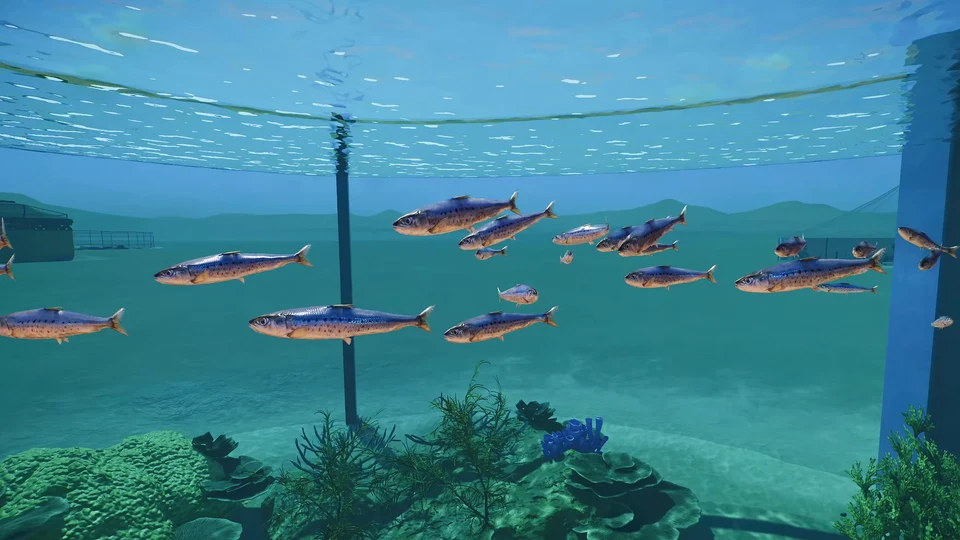 AquariumsPlanet Zoo 2 Shoals: Species & Shoal HealthThe 21 shoal fish with ticks for your zoo, how many shoals each aquarium takes, the three groups of shoals that can share a tank, and what the shoal panel shows.
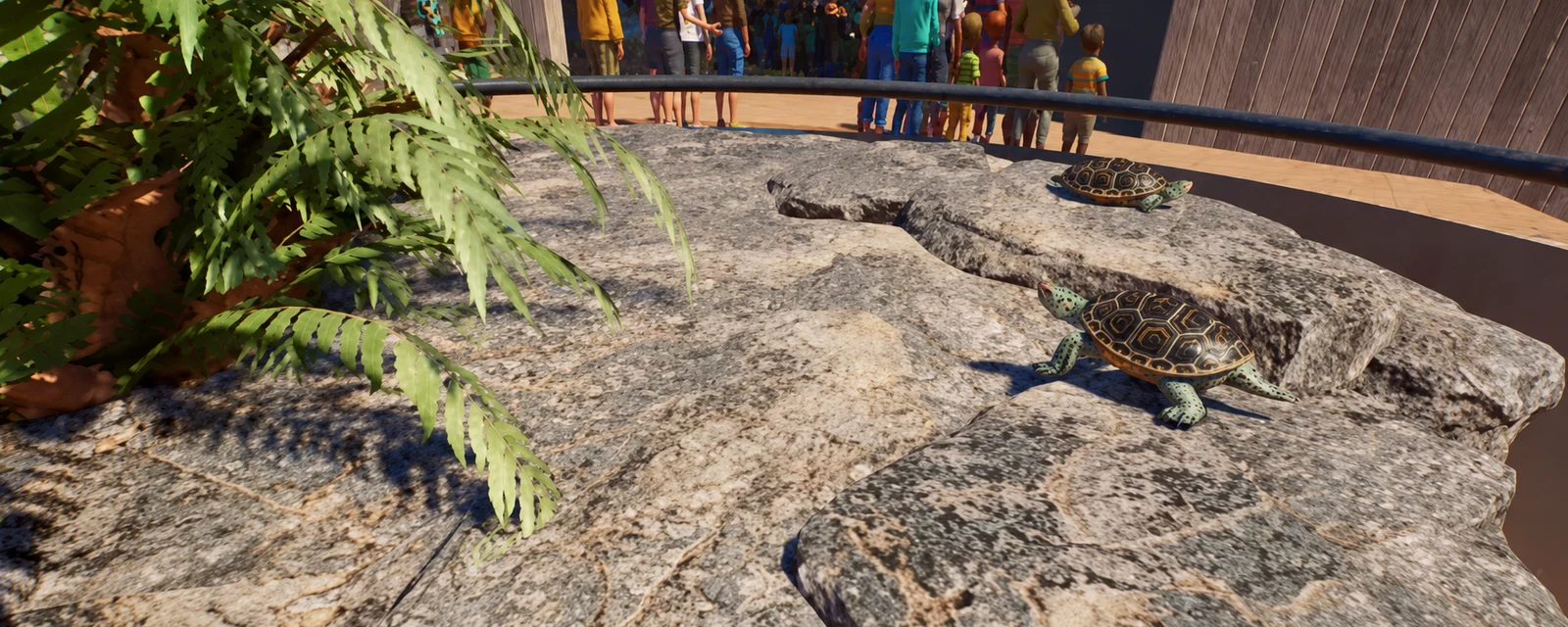 ExhibitsPlanet Zoo 2 Exhibit Animals: Full ListThe small animals kept in exhibits: insects, a tarantula, a scorpion, a centipede, frogs, snakes, lizards, a jellyfish and exhibit fish.
- WaterPlanet Zoo 2 Water Filtration & Salinity GuideHow to build a filtration network, what Water Pumps do, how to set salinity and water temperature, and which animals live in each kind of water.