Habitat building
Planet Zoo 2 Terrain Requirements: Grass, Sand, Rock and Waterlogged
Every Planet Zoo 2 animal with a terrain need, from the official Zoopedia: how much Grass, Sand, Soil, Rock, Waterlogged ground and Snow its habitat may have. Pick a terrain type to see who needs it, or look up one animal.
Last updated Game version: Launch edition (October 13, 2026); build number not confirmed
Terrain finder
Waterlogged: 45 animals accept it
The share of the habitat or aquarium each animal accepts, as its Zoopedia panel shows it. A minimum above 0% means the animal needs at least that much.
- Common Hippopotamus: 20–60% (Terrestrial)
- Eurasian Bittern: 20–100% (Flying)
- Greater Flamingo: 20–100% (Flying)
- Nile Monitor: 20–70% (Terrestrial)
- Shoebill: 20–100% (Flying)
- African Savannah Elephant: 10–40% (Terrestrial)
- Asian Elephant: 10–40% (Terrestrial)
- Black Rhinoceros: 10–40% (Terrestrial)
- White-Tailed Sea-Eagle: 10–100% (Flying)
- Asian Small-Clawed Otter: 0–100% (Terrestrial)
- Bactrian Camel: 0–5% (Terrestrial)
- Black Wildebeest: 0–10% (Terrestrial)
- Blue Wildebeest: 0–10% (Terrestrial)
- Cape Buffalo: 0–10% (Terrestrial)
- Common Ostrich: 0–10% (Terrestrial)
- Common Warthog: 0–30% (Terrestrial)
- Eurasian Beaver: 0–100% (Terrestrial)
- Eurasian Lynx: 0–10% (Terrestrial)
- European Bison: 0–20% (Terrestrial)
- Galápagos Giant Tortoise: 0–30% (Terrestrial)
- Gemsbok: 0–10% (Terrestrial)
- Gharial: 0–100% (Terrestrial)
- Great Hornbill: 0–10% (Flying)
- Komodo Dragon: 0–10% (Terrestrial)
- Lion: 0–10% (Terrestrial)
- Long-Eared Owl: 0–40% (Flying)
- Malayan Tapir: 0–100% (Terrestrial)
- Masai Giraffe: 0–10% (Terrestrial)
- Meerkat: 0–5% (Terrestrial)
- Plains Zebra: 0–10% (Terrestrial)
- Przewalski's Horse: 0–10% (Terrestrial)
- Red Deer: 0–10% (Terrestrial)
- Red Panda: 0–5% (Terrestrial)
- Reticulated Giraffe: 0–10% (Terrestrial)
- Ring-Tailed Lemur: 0–10% (Terrestrial)
- Saltwater Crocodile: 0–100% (Terrestrial)
- Secretarybird: 0–10% (Flying)
- Siamang: 0–10% (Terrestrial)
- Snow Leopard: 0–10% (Terrestrial)
- Sumatran Orangutan: 0–10% (Terrestrial)
- Sumatran Tiger: 0–30% (Terrestrial)
- Thomson's Gazelle: 0–10% (Terrestrial)
- Toco Toucan: 0–50% (Flying)
- Western Chimpanzee: 0–10% (Terrestrial)
- White-Backed Vulture: 0–10% (Flying)
How terrain works in Planet Zoo 2
Frontier names four core terrain types in every environment: Grass, Sand, Soil and Rock. Some animals want something more specific, such as Long Grass, and two brushes paint surface water and snow over the core types: Waterlogged and Snow. Each animal's Zoopedia panel gives a range for each type it accepts, from a minimum to a maximum share of its habitat. A minimum above 0% is a need; a range that starts at 0% is allowed but optional.
Terrain is part of an animal's Environment welfare, together with plants and drinking water, so the mix counts alongside space and temperature. You paint it with the terrain painting tools, which have adaptive, blend and paint modes and let you sculpt while you paint.
Waterlogged terrain
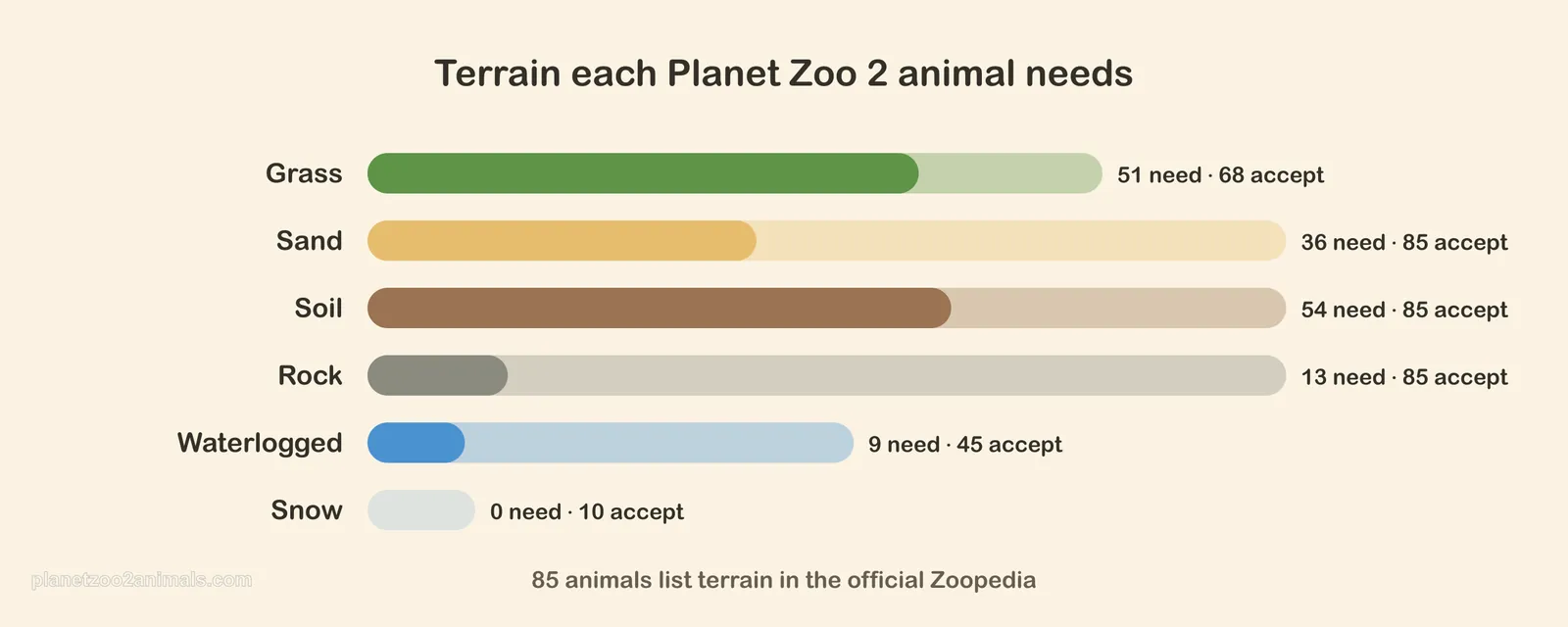
45 animals accept waterlogged ground, and nine need some of it. The Common Hippopotamus, Eurasian Bittern, Greater Flamingo, Nile Monitor and Shoebill need at least 20%; the African Savannah Elephant, Asian Elephant, Black Rhinoceros and White-Tailed Sea-Eagle at least 10%. Paint it with the Waterlogged brush. For swimming and drinking, Frontier's guide points to a body of water, made with the Add Water tool in a dip in the ground.
Snow
10 animals accept snow on the ground, and none of them needs it: Bactrian Camel, Eurasian Beaver, Eurasian Brown Bear, European Bison, Giant Panda, Grey Wolf, Grizzly Bear, Przewalski's Horse, Snow Leopard and Wild Boar. Painted snow only stays if it is cold enough. Frontier suggests a Cooler to keep it in a hot biome, while a Heater in a cold biome melts the snow around it. Snow that falls in winter weather turns back into the ground beneath when it warms up.
Grass, long grass and short grass
51 animals need some kind of grass. Nine need Long Grass: Black Wildebeest, Blue Wildebeest, Common Hippopotamus, Eurasian Bittern, Gemsbok, Greater Flamingo, Red Deer, Sable Antelope and Springbok. 14 need Short Grass: Asian Small-Clawed Otter, Cape Buffalo, Common Warthog, Galápagos Giant Tortoise, Mountain Hare, Nyala, Ring-Tailed Lemur, Secretarybird, Siamang, Sumatran Orangutan, Thomson's Gazelle, Western Chimpanzee, Western Lowland Gorilla and White-Backed Vulture. The Red Panda wants the most plain Grass, at least 50%.
Sand, soil and rock
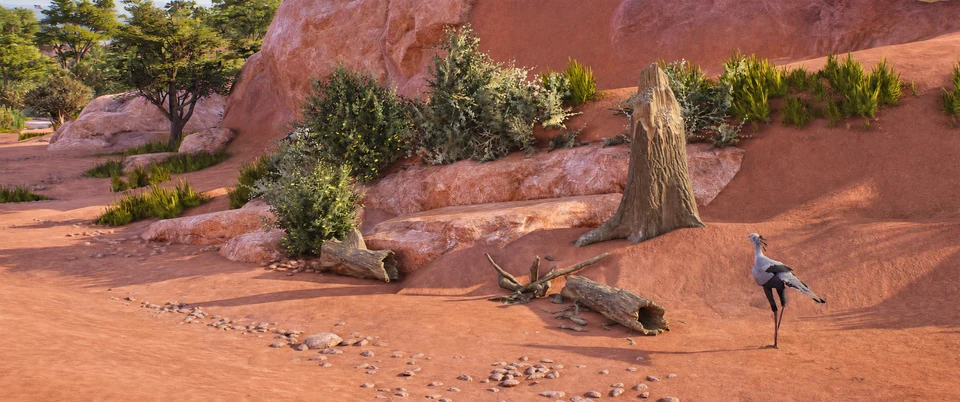
Soil is the most common need, listed with a minimum above 0% by 54 animals. 36 need some sand, from the meerkat to the sharks and rays. Rock is needed by only 13, and the Snow Leopard wants the most, at least 30%.
Aquarium animals have terrain too: 16 list ranges for their aquarium, and Blacktip Reef Shark, Clown Triggerfish, Hawksbill Turtle and Red Lionfish need Fine Sand. The other aquarium animals and all 46 exhibit animals list no terrain. To check a whole habitat at once, add its animals to the Planet Zoo 2 habitat planner, which shows the terrain mix every animal accepts; for the space each one needs to rest out of sight, see the Planet Zoo 2 shelter area page.
Terrain for every animal
All 85 animals whose panel lists terrain, as checked on October 19, 2026. An empty cell means the panel does not list that type.
| Animal | Grass | Sand | Soil | Rock | Waterlogged | Snow |
|---|---|---|---|---|---|---|
| Aardvark | 20–70% | 0–30% | 20–50% | 0–20% | ||
| African Leopard | 10–90% | 0–20% | 10–60% | 0–40% | ||
| African Penguin | 20–100% | 0–50% | 10–100% | |||
| African Savannah Elephant | 20–40% | 10–40% | 20–40% | 0–20% | 10–40% | |
| African Wild Dog | 20–70% | 10–40% | 20–70% | 0–30% | ||
| Asian Elephant | 20–40% | 10–40% | 20–40% | 0–20% | 10–40% | |
| Asian Small-Clawed Otter | 20–100%, Short grass 15–100% | 0–60% | 0–50% | 0–20% | 0–100% | |
| Bactrian Camel | 0–80% | 0–100% | 0–50% | 0–20% | 0–5% | 0–100% |
| Binturong | 0–100% | 0–20% | 0–100% | 0–20% | ||
| Black Rhinoceros | 10–60% | 10–40% | 10–60% | 0–20% | 10–40% | |
| Black Wildebeest | Long grass 25–80%, 30–80% | 0–20% | 20–60% | 0–20% | 0–10% | |
| Blackspotted Puffer | 30–80% | 0–50% | 20–70% | |||
| Blacktip Reef Shark | Coarse sand 0–5%, Fine sand 20–100% | 0–5% | 0–50% | |||
| Blue Wildebeest | Long grass 25–80%, 30–80% | 0–20% | 20–60% | 0–20% | 0–10% | |
| Cape Buffalo | 30–100%, Short grass 25–100% | 0–30% | 10–40% | 0–20% | 0–10% | |
| Clown Triggerfish | Fine sand 30–80%, Coarse sand 0–5% | 0–50% | 20–70% | |||
| Common Hippopotamus | Long grass 15–60%, 20–60% | 20–60% | 0–60% | 0–20% | 20–60% | |
| Common Ostrich | 20–80% | 0–60% | 20–60% | 0–20% | 0–10% | |
| Common Warthog | Short grass 25–80% | 0–30% | 20–60% | 0–20% | 0–30% | |
| Dolphinfish | 30–100% | 0–70% | 0–20% | |||
| Eurasian Beaver | 10–60% | 10–60% | 10–60% | 10–60% | 0–100% | 0–100% |
| Eurasian Bittern | Long grass 30–100% | 0–10% | 10–30% | 0–30% | 20–100% | |
| Eurasian Brown Bear | 10–50% | 10–50% | 10–50% | 10–50% | 0–100% | |
| Eurasian Lynx | 30–80% | 0–20% | 0–40% | 20–60% | 0–10% | |
| European Bison | 30–100% | 0–40% | 20–100% | 0–20% | 0–20% | 0–100% |
| Galápagos Giant Tortoise | Short grass 20–80% | 20–80% | 0–30% | 0–40% | 0–30% | |
| Gemsbok | Long grass 25–100%, 30–100% | 0–20% | 10–60% | 0–20% | 0–10% | |
| Gharial | Short grass 0–40% | 40–100% | 0–60% | 0–20% | 0–100% | |
| Giant Grouper | 30–80% | 0–50% | 20–70% | |||
| Giant Panda | 10–50% | 0–40% | 20–60% | 10–50% | 0–100% | |
| Golden Eagle | 0–30% | 20–100% | 20–100% | 0–20% | ||
| Golden Lion Tamarin | Short grass 0–40% | 0–10% | 30–90% | 0–20% | ||
| Goodfellow's Tree-Kangaroo | 0–30% | 0–50% | 50–100% | 0–20% | ||
| Great Hammerhead | 20–100% | 0–100% | 0–20% | |||
| Great Hornbill | 0–40% | 0–5% | 40–100% | 0–20% | 0–10% | |
| Greater Flamingo | Long grass 20–50% | 0–5% | 30–60% | 0–20% | 20–100% | |
| Grey Wolf | 10–50% | 10–50% | 10–50% | 10–50% | 0–100% | |
| Grizzly Bear | 10–100% | 0–20% | 10–100% | 0–70% | 0–100% | |
| Hawksbill Turtle | Fine sand 50–100%, Coarse sand 0–5% | 0–5% | 0–50% | |||
| Humphead Wrasse | 30–80% | 0–50% | 20–70% | |||
| Indo-Pacific Leopard Shark | 20–100% | 0–50% | 0–50% | |||
| Javan Green Magpie | 0–50% | 0–20% | 30–100% | 0–20% | ||
| Javanese Cownose Ray | 50–100% | 0–50% | 0–20% | |||
| Komodo Dragon | 0–50% | 0–40% | 30–100% | 0–30% | 0–10% | |
| Lion | 20–90% | 0–60% | 10–80% | 0–20% | 0–10% | |
| Long-Eared Owl | 10–80% | Coarse sand 0–5% | 20–90% | 0–20% | 0–40% | |
| Long-Tailed Parakeet | 0–50% | Coarse sand 0–5% | 20–100% | 0–20% | ||
| Malayan Tapir | 20–50% | 0–10% | 30–80% | 0–20% | 0–100% | |
| Masai Giraffe | 20–90% | 10–50% | 0–50% | 0–20% | 0–10% | |
| Meerkat | Short grass 0–30% | 30–70% | 20–70% | 0–30% | 0–5% | |
| Mountain Hare | 30–100%, Short grass 25–100% | 10–30% | 0–40% | 0–40% | ||
| Nile Monitor | 0–50% | 0–40% | 30–80% | 0–40% | 20–70% | |
| North Sulawesi Babirusa | 0–50% | 0–50% | 40–100% | 0–30% | ||
| Nyala | 30–100%, Short grass 25–100% | 0–20% | 0–60% | 0–20% | ||
| Ocean Sunfish | 0–100% | 0–100% | 0–20% | |||
| Ocellated Eagle Ray | 50–100% | 0–50% | 0–20% | |||
| Plains Zebra | 40–80% | 0–20% | 10–60% | 0–20% | 0–10% | |
| Przewalski's Horse | 40–100% | 0–30% | 10–60% | 0–20% | 0–10% | 0–100% |
| Red Deer | 30–100%, Long grass 25–100% | 0–20% | 0–60% | 0–20% | 0–10% | |
| Red Lionfish | 30–80%, Fine sand 25–80% | 0–50% | 20–70% | |||
| Red Panda | 50–100% | 0–20% | 0–50% | 0–20% | 0–5% | |
| Reticulated Giraffe | 20–90% | 10–50% | 0–50% | 0–20% | 0–10% | |
| Ring-Tailed Lemur | Short grass 10–40% | 0–20% | 10–80% | 0–40% | 0–10% | |
| Sable Antelope | Long grass 25–100%, 30–100% | 0–30% | 10–40% | 0–20% | ||
| Sailfin Snapper | 30–80% | 0–20% | 20–70% | |||
| Saltwater Crocodile | Short grass 0–50% | 30–100% | 20–70% | 0–40% | 0–100% | |
| Sand Tiger Shark | 20–100% | 0–100% | 0–20% | |||
| Secretarybird | Short grass 20–80% | 10–70% | 10–70% | 0–20% | 0–10% | |
| Shoebill | 20–80% | 0–80% | 20–80% | 0–20% | 20–100% | |
| Siamang | Short grass 20–100% | 0–20% | 10–80% | 0–40% | 0–10% | |
| Snow Leopard | 10–60% | 0–20% | 10–60% | 30–80% | 0–10% | 0–100% |
| Spotted Hyena | 20–80% | 0–50% | 10–50% | 0–50% | ||
| Springbok | Long grass 25–100%, 30–100% | 0–10% | 10–100% | 0–20% | ||
| Sumatran Orangutan | Short grass 20–100% | 0–20% | 10–80% | 0–40% | 0–10% | |
| Sumatran Tiger | 20–90% | 0–60% | 10–80% | 0–20% | 0–30% | |
| Sun Bear | 0–50% | 0–10% | 50–100% | 0–20% | ||
| Sunda Pangolin | 10–50% | 0–30% | 40–100% | 0–20% | ||
| Thomson's Gazelle | Short grass 25–100%, 30–100% | 0–20% | 0–60% | 0–20% | 0–10% | |
| Toco Toucan | 0–40% | 0–5% | 40–100% | 0–20% | 0–50% | |
| West Indian Manatee | 30–100% | 0–50% | 0–30% | |||
| Western Chimpanzee | Short grass 20–100% | 0–20% | 10–80% | 0–40% | 0–10% | |
| Western Lowland Gorilla | Short grass 20–100% | 0–20% | 10–80% | 0–40% | ||
| White-Backed Vulture | Short grass 20–80% | 10–70% | 10–70% | 0–20% | 0–10% | |
| White-Tailed Sea-Eagle | 0–30% | 20–100% | 20–100% | 0–20% | 10–100% | |
| Wild Boar | 10–50% | 10–50% | 30–50% | 0–20% | 0–100% |
Planet Zoo 2 terrain questions
What terrain do animals need in Planet Zoo 2?
Each animal's Zoopedia panel gives a range for each terrain type it accepts: Grass, Sand, Soil and Rock, plus more specific types such as Long Grass, Short Grass, Fine Sand, Waterlogged and Snow. 85 of the 136 animals list terrain; exhibit animals and most aquarium animals do not.
What is waterlogged terrain in Planet Zoo 2?
Surface water painted over the ground with the Waterlogged brush in the terrain painting tools. 45 animals accept it, and 9 need some: Common Hippopotamus (20–60%), Eurasian Bittern (20–100%), Greater Flamingo (20–100%), Nile Monitor (20–70%), Shoebill (20–100%), African Savannah Elephant (10–40%), Asian Elephant (10–40%), Black Rhinoceros (10–40%) and White-Tailed Sea-Eagle (10–100%).
How do you keep snow on the ground in Planet Zoo 2?
Snow painted with the Snow brush only stays if it is cold enough. Frontier suggests a Cooler to keep it cold in a hot biome; a Heater in a cold biome melts the snow around it.
Which animals need long grass in Planet Zoo 2?
Black Wildebeest, Blue Wildebeest, Common Hippopotamus, Eurasian Bittern, Gemsbok, Greater Flamingo, Red Deer, Sable Antelope and Springbok. Each of them needs some Long Grass; the finder on this page shows how much.
Do aquarium animals need terrain?
Some do: 16 aquarium animals list terrain ranges, mostly Sand and Rock, and four of them need Fine Sand. The other aquarium animals and all 46 exhibit animals list none.
Sources
- Planet Zoo 2 Zoopedia: the Habitat panel of each animal (official)
- Planet Zoo 2 player guide: The Basics, on terrain painting and water tools (official)
- Planet Zoo 2 player guide: Animals, on Environment welfare (official)
Checked against the official pages on October 19, 2026. Official information can change. Each page shows its check date; missing game data is left unconfirmed until a source supports it.
Continue reading
 Next stepMixing animals? The planner shows the terrain range every one of them accepts.Planet Zoo 2 Habitat Planner & CompatibilityCompare animal counts, checked space, shared temperature and barriers; see official relationship records and save your plan.Go there
Related pages
 ShelterPlanet Zoo 2 Shelter Area for Every AnimalHow much shelter area each habitat and aviary animal needs per adult and for its smallest group, with a calculator and how to build shelter that counts.
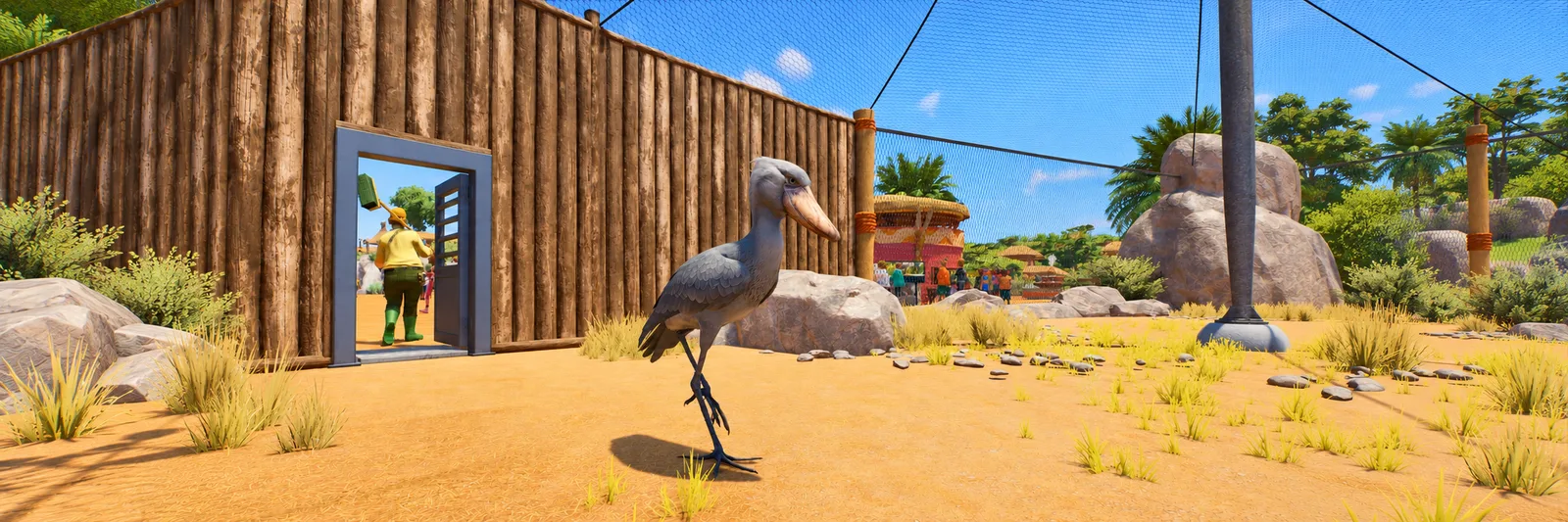


Card pictures: AI-edited game image: Planet Zoo 2 © Frontier Developments · Illustration: AI-generated artwork, not a game screenshot · Processed screenshot: Planet Zoo 2 © Frontier Developments