Animals
Planet Zoo 2 Breeding Guide: Every Animal’s Life Cycle
When each animal mates, how long until its young arrive and how hard it is to breed. Look up an animal, list every animal at one difficulty, or read how breeding, nests, genetics and contraception work below.
Last updated Game version: Update 1.0.5 (October 16, 2026)
Look up an animal's breeding
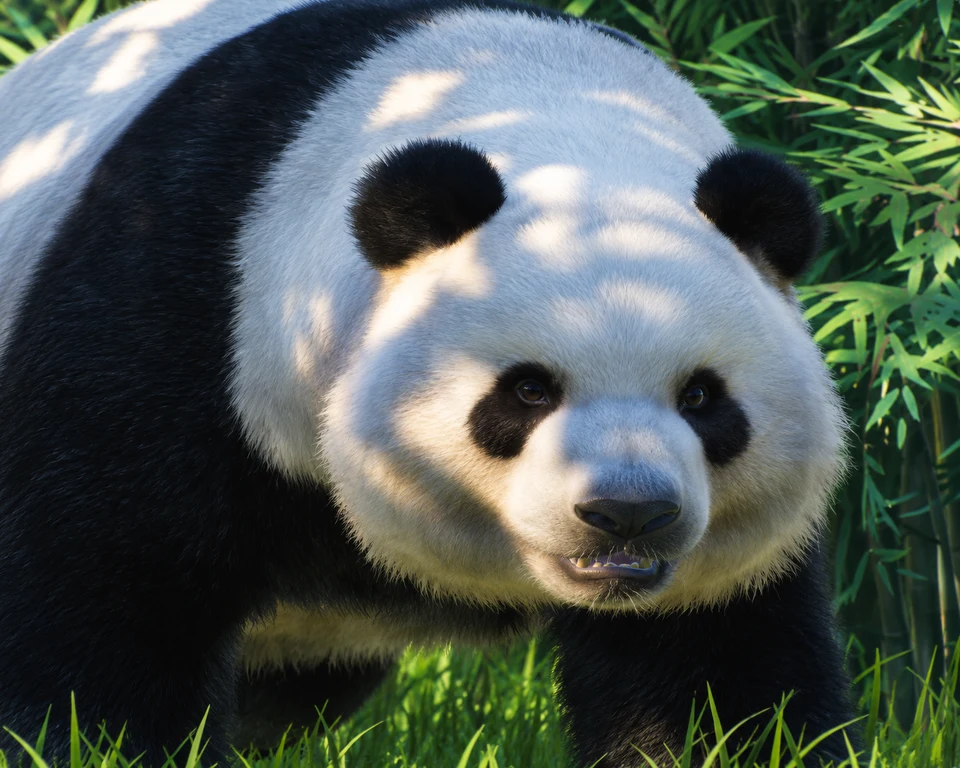
Giant Panda
- Breeding difficulty
- Very Difficult
- Mating season
- Spring
- Age of sexual maturity
- 6 years
- Gestation or incubation
- 4.2 months
- Young per birth or clutch
- 1
- Time between births
- 20 months
- Lives up to
- 30 years
- Mating system
- Promiscuous
- Offspring that leave the group
- All offspring
How breeding works in Planet Zoo 2
Healthy adult animals mate during their mating season, as long as they are not already raising young. Some species have a set season such as spring or winter; 27 of the 64 animals in our table breed all year. Conception is more likely when welfare is high, when no other potential mate distracts the pair, and once you unlock fertility boosts through Research on the species.
Nests for egg-laying animals
A mixed group of egg-laying animals needs at least one nest per pair, and only pairs with a nest they can reach will mate. Each species uses its own nest type: filter the Bedding, Shelters and Nests section of the Habitats browser by species, or select the Nesting Sites need in the animal's Info Panel to see which nests fit. Some species want their nest out of sight of guests.
Genetics and choosing mates
Every animal inherits a mix of genes from both parents, so young can be better or worse than either. The Compare Mates panel in the Genetics tab shows the likely result of a pairing. Vitality and Longevity improve when both parents carry good genes; Fertility and Immunity improve when the parents are different from each other, and fall with inbreeding. Animals from the Trade Centre with a high Genetic Rating lift the rating of their offspring.
Young, outsiders and sterility
Newborns start as juveniles that need less space and only bond with their parents. When they mature, some species push certain offspring out of the group; these outsiders only fight the others and should be moved. The table below lists which offspring leave for each animal. Some species also become sterile at a set age.
Shoals and colonies
Shoal fish and colony animals in exhibits do not pair up. The whole group grows each mating season depending on the species, Research, its size and its welfare, and splits in two once it reaches its maximum size. Poor welfare or predation shrinks it.
Stopping animals from breeding
Turn on Apply Contraceptives in an animal's Info Panel, or use the Contraceptives toggle under Management, Animals. Animals on contraception do not breed, and shoals and colonies on it do not split. Keeping the sexes in separate habitats works too.
Why your animals are not breeding
- Open Compare Mates in the Genetics tab: it names the problem, such as low welfare or illness, and nothing breeds until it is fixed.
- Check the mating season below; outside it, nothing happens.
- Egg-layers need a nest per pair that both can reach.
- A pair that is still raising juveniles waits until they grow up.
- Make sure contraception is off and neither animal is past its age of sterility.
- Related animals lose Fertility with each generation; bring in an unrelated mate.
Easiest and hardest animals to breed
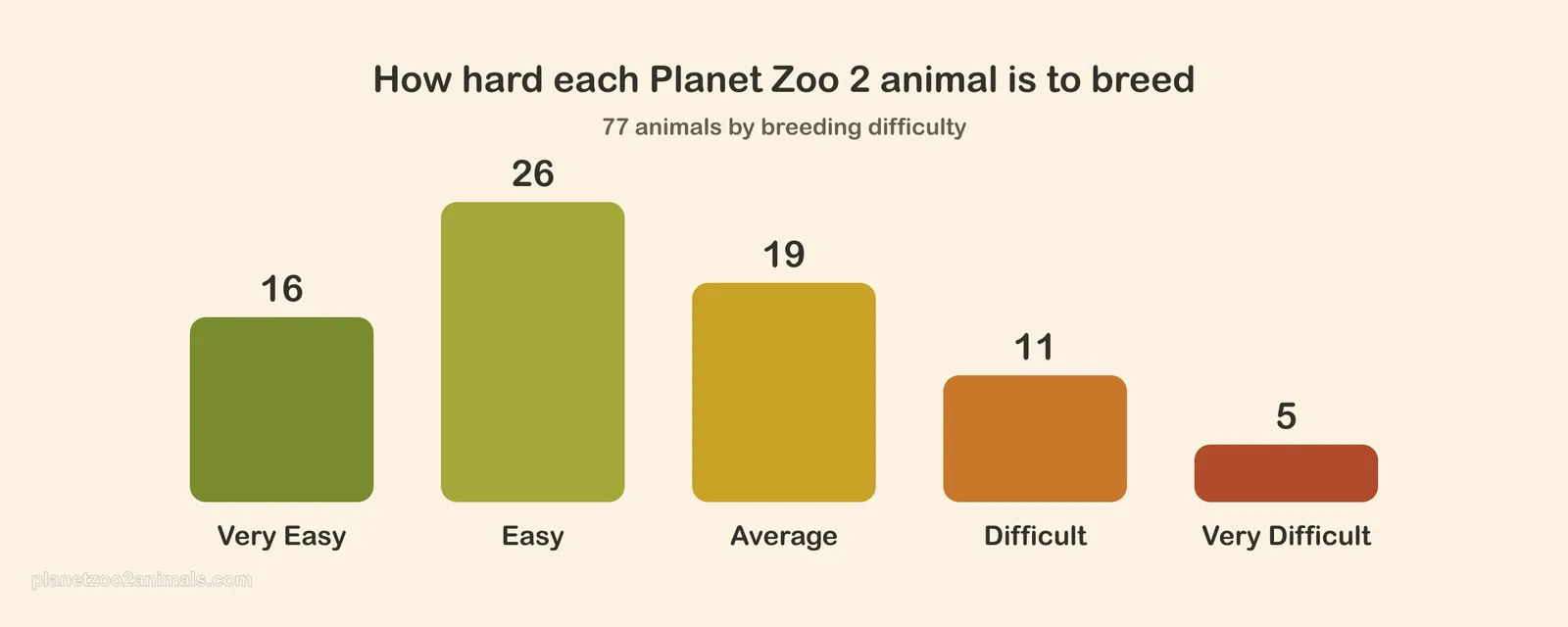
Very Easy (16): the Bactrian Camel, Black Wildebeest, Blue Wildebeest, European Bison, Galápagos Giant Tortoise, Gemsbok, Greater Flamingo, Meerkat, Mountain Hare, Plains Zebra, Red Panda, Sable Antelope, Spotted Hyena, Springbok, Thomson's Gazelle and Wild Boar.
Very Difficult (5): the Giant Panda, Great Hammerhead, Komodo Dragon, Sand Tiger Shark and Sunda Pangolin. The Giant Panda is the classic case: it becomes an adult at 6 years, mates only in spring and has a single cub about every 20 months. The African Savannah Elephant is slower still, with a 22 months pregnancy and 108 months between calves. The longest pregnancy in our table, 22 months, belongs to the African Savannah Elephant and Asian Elephant.
Breeding pairs need space for their young as they grow; the Planet Zoo 2 habitat planner gives the official area for any adult count, and the Planet Zoo 2 Zoopedia guide explains the rest of each entry.
Life cycle of every animal
64 animals, A to Z. The in-game Lifecycle panel rounds months to whole numbers, so a 4.2 month pregnancy shows as 4 months there. Litter is the number of young per birth or clutch.
| Animal | Difficulty | Mating season | Adult at | Gestation | Litter | Between births | Lives up to | Offspring that leave |
|---|---|---|---|---|---|---|---|---|
| Aardvark | Easy | Summer | 2 years | 7 months | 1 | 17 months | 28 years | None |
| African Leopard | Average | All year | 2.5 years | 3.2 months | 1–2 | 21 months | 20 years | All offspring |
| African Savannah Elephant | Difficult | All year | 10 years | 22 months | 1 | 108 months | 86 years | Male offspring |
| African Wild Dog | Easy | Summer | 1.5 years | 2.5 months | 1–6 | 12 months | 17 years | Female offspring |
| Asian Elephant | Difficult | All year | 11 years | 22 months | 1 | 96 months | 70 years | Male offspring |
| Asian Small-Clawed Otter | Average | All year | 2 years | 2.3 months | 1–3 | 10 months | 16 years | None |
| Bactrian Camel | Very Easy | Spring | 6 years | 13 months | 1 | 23 months | 45 years | Male offspring |
| Binturong | Difficult | All year | 2.5 years | 3 months | 1–3 | 9 months | 25 years | All offspring |
| Black Rhinoceros | Difficult | All year | 7 years | 15 months | 1 | 9 months | 45 years | None |
| Black Wildebeest | Very Easy | Spring | 2 years | 8.5 months | 1 | 4 months | 22 years | Male offspring |
| Blacktip Reef Shark | Average | Summer | 6.5 years | 9 months | 2–5 | 3 months | 15 years | None |
| Blue Wildebeest | Very Easy | Spring | 2 years | 8.5 months | 1 | 4 months | 21 years | Male offspring |
| Cape Buffalo | Easy | All year | 4 years | 11.5 months | 1 | 12 months | 32 years | Male offspring |
| Common Hippopotamus | Average | All year | 7 years | 8 months | 1 | 16 months | 55 years | None |
| Common Warthog | Easy | Summer | 2 years | 5 months | 1–5 | 7 months | 21 years | Male offspring |
| Eurasian Beaver | Average | Winter | 2 years | 3.5 months | 1–4 | 9 months | 24 years | None |
| Eurasian Brown Bear | Easy | Summer | 4 years | 7.5 months | 1–4 | 52 months | 26 years | All offspring |
| Eurasian Lynx | Average | Spring | 3 years | 2.3 months | 1–4 | 22 months | 24 years | All offspring |
| European Bison | Very Easy | Autumn | 3 years | 8.7 months | 1 | 15 months | 28 years | Male offspring |
| Galápagos Giant Tortoise | Very Easy | Spring | 25 years | 2 months | 2–6 | 22 months | 170 years | Male offspring |
| Gemsbok | Very Easy | All year | 2 years | 8.5 months | 1 | 10 months | 23 years | Male offspring |
| Gharial | Easy | Winter | 16 years | 2 months | 2–9 | 10 months | 65 years | None |
| Giant Panda | Very Difficult | Spring | 6 years | 4.2 months | 1 | 20 months | 30 years | All offspring |
| Golden Lion Tamarin | Easy | Autumn and Winter | 3 years | 4.3 months | 1–3 | 8 months | 20 years | None |
| Goodfellow's Tree-Kangaroo | Easy | All year | 3 years | 9.8 months | 1 | 14 months | 20 years | All offspring |
| Great Hammerhead | Very Difficult | Spring and Summer | 15 years | 11 months | 1–6 | 13 months | 44 years | None |
| Greater Flamingo | Very Easy | Summer | 3 years | 0.7 months | 1 | 11 months | 50 years | None |
| Grey Wolf | Easy | Spring | 2 years | 2.3 months | 1–5 | 10 months | 12 years | None |
| Grizzly Bear | Easy | Summer | 5 years | 7.5 months | 1–4 | 52 months | 26 years | All offspring |
| Hawksbill Turtle | Difficult | Spring | 25 years | 2 months | 2–4 | 34 months | 50 years | None |
| Indo-Pacific Leopard Shark | Average | All year | 8 years | 6.5 months | 2–6 | 6 months | 30 years | None |
| Javanese Cownose Ray | Average | Summer | 5 years | 12 months | 1–2 | 12 months | 20 years | None |
| Komodo Dragon | Very Difficult | Summer | 8 years | 1.4 months | 1–4 | 11 months | 30 years | None |
| Lion | Easy | All year | 3 years | 3.6 months | 1–3 | 32 months | 20 years | Male offspring |
| Malayan Tapir | Easy | Summer | 3 years | 13.1 months | 1 | 11 months | 36 years | None |
| Masai Giraffe | Easy | All year | 4 years | 14.2 months | 1 | 22 months | 37 years | Male offspring |
| Meerkat | Very Easy | All year | 3 years | 2.2 months | 1–3 | 10 months | 20 years | None |
| Mountain Hare | Very Easy | Spring and Summer | 1 year | 1.6 months | 1–4 | 10 months | 10 years | None |
| Nile Monitor | Average | Summer | 4 years | 1 month | 2–8 | 11 months | 20 years | None |
| North Sulawesi Babirusa | Easy | All year | 2 years | 5.3 months | 1–2 | 7 months | 24 years | Male offspring |
| Nyala | Easy | Autumn | 1.5 years | 7 months | 1 | 5 months | 23 years | Male offspring |
| Ocellated Eagle Ray | Easy | Summer | 5 years | 12 months | 1–3 | 12 months | 30 years | None |
| Plains Zebra | Very Easy | All year | 4 years | 13 months | 1 | 11 months | 40 years | Male offspring |
| Przewalski's Horse | Easy | Spring | 2 years | 12 months | 1 | 12 months | 36 years | Male offspring |
| Red Deer | Easy | Autumn | 4 years | 8.2 months | 1 | 4 months | 27 years | Male offspring |
| Red Panda | Very Easy | Spring | 1.5 years | 4.3 months | 1–3 | 8 months | 15 years | All offspring |
| Reticulated Giraffe | Easy | All year | 4 years | 14.2 months | 1 | 22 months | 35 years | Male offspring |
| Ring-Tailed Lemur | Easy | Summer | 3 years | 4.4 months | 1 | 8 months | 27 years | Male offspring |
| Sable Antelope | Very Easy | Summer | 1.5 years | 8.5 months | 1 | 3 months | 22 years | Male offspring |
| Saltwater Crocodile | Easy | Spring | 14 years | 1 month | 1–4 | 11 months | 114 years | None |
| Sand Tiger Shark | Very Difficult | Autumn and Winter | 6 years | 9 months | 1–2 | 27 months | 30 years | None |
| Siamang | Average | All year | 8 years | 8 months | 1 | 28 months | 50 years | None |
| Snow Leopard | Average | Winter | 3 years | 3 months | 1–3 | 21 months | 25 years | All offspring |
| Spotted Hyena | Very Easy | All year | 3 years | 3.6 months | 1–3 | 11 months | 20 years | Male offspring |
| Springbok | Very Easy | All year | 1 year | 6 months | 1 | 6 months | 14 years | Male offspring |
| Sumatran Orangutan | Easy | All year | 10 years | 8.8 months | 1 | 105 months | 58 years | Male offspring |
| Sumatran Tiger | Average | All year | 4 years | 3.4 months | 1–4 | 21 months | 20 years | All offspring |
| Sun Bear | Easy | All year | 4 years | 6.8 months | 1–3 | 29 months | 30 years | All offspring |
| Sunda Pangolin | Very Difficult | All year | 2 years | 5.9 months | 1 | 6 months | 20 years | All offspring |
| Thomson's Gazelle | Very Easy | All year | 2 years | 6 months | 1 | 6 months | 20 years | Male offspring |
| West Indian Manatee | Average | Summer | 7 years | 13 months | 1 | 23 months | 50 years | None |
| Western Chimpanzee | Average | All year | 14 years | 8 months | 1 | 52 months | 60 years | Female offspring |
| Western Lowland Gorilla | Average | All year | 10 years | 9 months | 1 | 60 months | 60 years | All offspring |
| Wild Boar | Very Easy | Autumn | 1 year | 3.7 months | 2–5 | 8 months | 27 years | Male offspring |
Aviary birds, most aquarium fish and the exhibit animals are not in this table yet: their life cycle values did not pass our check. Their breeding difficulty, where we have it, is in the lookup above. These values were checked on October 21, 2026.
Planet Zoo 2 breeding questions
How do you breed animals in Planet Zoo 2?
Keep a healthy adult male and female together in a habitat that meets their needs. They mate in their mating season if they are not already raising young. Egg-laying species also need one suitable nest per pair. Better welfare, better Genetics and species Research all raise the chance of conception.
Why are my animals not breeding in Planet Zoo 2?
Open the Genetics tab of the animal’s Info Panel and compare mates: it lists what is blocking conception, such as low welfare or illness. Also check that it is the mating season, that egg-layers have a nest per pair, that the pair is not still raising juveniles, that contraception is off and that neither animal has reached its age of sterility.
How do you stop animals breeding in Planet Zoo 2?
Turn on Apply Contraceptives in the animal’s Info Panel, or use the Contraceptives toggle under Management, Animals for any animal in your zoo. You can also keep the sexes in separate habitats. Contraception also stops shoals and colonies from splitting.
Which animals are hardest to breed in Planet Zoo 2?
Giant Panda, Great Hammerhead, Komodo Dragon, Sand Tiger Shark and Sunda Pangolin have Very Difficult breeding in the Zoopedia. 16 animals, including the Bactrian Camel, Black Wildebeest, Blue Wildebeest and European Bison, are Very Easy.
How long is a giant panda pregnancy in Planet Zoo 2?
About 4.2 months. Giant pandas mate in spring, become adults at 6 years, have one cub at a time about 20 months apart, and are Very Difficult to breed.
Sources
Checked against the official pages on October 21, 2026. How breeding works is official. Each animal's values were compared across two independent tables and against the in-game Zoopedia Lifecycle panel in released-game footage; only values that agree are shown.
Continue reading
 Next stepExpecting young? Check how much space the bigger group will need.Planet Zoo 2 Habitat Planner & CompatibilityCompare animal counts, checked space, shared temperature and barriers; see official relationship records and save your plan.Go there
Related pages
 ThrivingPlanet Zoo 2 Thriving Relationships by AnimalWhich animals thrive together: every Thriving and Neutral relationship in the official Zoopedia, read in both directions, and the two groups that all thrive with each other.
 Release groupsPlanet Zoo 2 Release Groups by AnimalWhich Wildlife Reserves each animal can go to and the release group types it lists, with a finder by reserve, group type and name.

Card pictures: AI-edited game image: Planet Zoo 2 © Frontier Developments · Processed screenshot: Planet Zoo 2 © Frontier Developments