Conservation
Planet Zoo 2 Release Groups by Animal
Find the release group types and Wildlife Reserves of every animal. In Planet Zoo 2 you release animals from your zoo in release groups, and each species' official Zoopedia entry lists the group types it can go in and the reserves it can go to. As of October 19, 2026, 58 species have a reserve, 46 more list group types but no reserve, and 32 show no release information.
Last updated Game version: Launch edition (October 13, 2026); build number not confirmed
Find an animal's release group and reserve
Choose a reserve or a group type, or type a name. The list starts with every animal that has a reserve; pick “No reserve listed” for the rest. How releasing works step by step is on the Planet Zoo 2 Wildlife Reserves guide.
58 animals that can go to a Wildlife Reserve.
- AardvarkTerrestrialReserves: Great Rift Valley, TanzaniaGroups: Female Bachelor Herd, Solitary Male
- African LeopardTerrestrialReserves: Great Rift Valley, TanzaniaGroups: Female Bachelor Herd, Solitary Male
- African Savannah ElephantTerrestrialReserves: Great Rift Valley, TanzaniaGroups: Male Bachelor Herd, Female Bachelor Herd, Solitary Male
- African TigerfishAquariumReserves: Great Rift Valley, TanzaniaGroups: Mixed Group
- African Wild DogTerrestrialReserves: Great Rift Valley, TanzaniaGroups: Mixed Group
- Asian ElephantTerrestrialReserves: SumatraGroups: Male Bachelor Herd, Female Bachelor Herd, Solitary Male
- Asian Small-Clawed OtterTerrestrialReserves: SumatraGroups: Mixed Group, Breeding Partners
- BinturongTerrestrialReserves: SumatraGroups: Solitary Male, Female Bachelor Herd
- Black RhinocerosTerrestrialReserves: Great Rift Valley, TanzaniaGroups: Female Bachelor Herd, Solitary Male, Breeding Partners
- Black WildebeestTerrestrialReserves: Great Rift Valley, TanzaniaGroups: Mixed Group, Male Bachelor Herd, Female Bachelor Herd
- Blue WildebeestTerrestrialReserves: Great Rift Valley, TanzaniaGroups: Mixed Group, Male Bachelor Herd, Female Bachelor Herd, Solitary Male
- Blunthead CichlidAquariumReserves: Great Rift Valley, TanzaniaGroups: Mixed Group
- Brown TroutAquariumReserves: Scottish Highlands, Sweden, PolandGroups: Mixed Group
- Cape BuffaloTerrestrialReserves: Great Rift Valley, TanzaniaGroups: Mixed Group, Male Bachelor Herd
- Clown LoachAquariumReserves: SumatraGroups: Mixed Group
- Common HippopotamusTerrestrialReserves: Great Rift Valley, TanzaniaGroups: Mixed Group, Solitary Male
- Common OstrichTerrestrialReserves: TanzaniaGroups: Mixed Group, Female Bachelor Herd
- Common RuddAquariumReserves: Scottish Highlands, Sweden, PolandGroups: Mixed Group
- Common WarthogTerrestrialReserves: Great Rift Valley, TanzaniaGroups: Male Bachelor Herd, Female Bachelor Herd, Solitary Male
- Eurasian BeaverTerrestrialReserves: Scottish Highlands, Sweden, PolandGroups: Mixed Group, Breeding Partners
- Eurasian BitternReserves: PolandGroups: Female Bachelor Herd, Solitary Male, Breeding Partners
- Eurasian Brown BearTerrestrialReserves: SwedenGroups: Mixed Group, Female Bachelor Herd, Solitary Male
- Eurasian LynxTerrestrialReserves: Scottish Highlands, SwedenGroups: Female Bachelor Herd, Solitary Male
- European BisonTerrestrialReserves: PolandGroups: Mixed Group, Male Bachelor Herd
- GemsbokTerrestrialReserves: Great Rift Valley, TanzaniaGroups: Mixed Group, Male Bachelor Herd
- Giant GouramiAquariumReserves: SumatraGroups: Mixed Group
- Golden EagleReserves: Scottish Highlands, Sweden, PolandGroups: Breeding Partners
- Great HornbillReserves: SumatraGroups: Female Bachelor Herd, Solitary Male, Breeding Partners
- Greater FlamingoReserves: Great Rift Valley, TanzaniaGroups: Mixed Group
- Grey WolfTerrestrialReserves: Scottish Highlands, Sweden, PolandGroups: Mixed Group, Breeding Partners
- LionTerrestrialReserves: Great Rift Valley, TanzaniaGroups: Mixed Group, Male Bachelor Herd, Female Bachelor Herd
- Long-Eared OwlReserves: Scottish Highlands, Sweden, PolandGroups: Female Bachelor Herd, Solitary Male, Breeding Partners
- Long-Tailed ParakeetReserves: SumatraGroups: Mixed Group
- Malayan TapirTerrestrialReserves: SumatraGroups: Female Bachelor Herd, Solitary Male
- Masai GiraffeTerrestrialReserves: Great Rift Valley, TanzaniaGroups: Mixed Group, Male Bachelor Herd, Female Bachelor Herd
- MeerkatTerrestrialReserves: Great Rift ValleyGroups: Mixed Group, Breeding Partners
- Mountain HareTerrestrialReserves: Scottish Highlands, SwedenGroups: Mixed Group, Female Bachelor Herd, Solitary Male
- Nile MonitorTerrestrialReserves: Great Rift Valley, TanzaniaGroups: Solitary Male, Solitary Female
- North Sulawesi BabirusaTerrestrialReserves: SumatraGroups: Female Bachelor Herd, Solitary Male
- NyalaTerrestrialReserves: Great Rift Valley, TanzaniaGroups: Mixed Group, Male Bachelor Herd, Female Bachelor Herd
- Plains ZebraTerrestrialReserves: Great Rift Valley, TanzaniaGroups: Mixed Group, Male Bachelor Herd
- Red DeerTerrestrialReserves: Scottish Highlands, Sweden, PolandGroups: Mixed Group, Female Bachelor Herd
- Reticulated GiraffeTerrestrialReserves: Great Rift Valley, TanzaniaGroups: Mixed Group, Male Bachelor Herd, Female Bachelor Herd
- Sable AntelopeTerrestrialReserves: Great Rift Valley, TanzaniaGroups: Mixed Group, Male Bachelor Herd, Female Bachelor Herd
- Saltwater CrocodileTerrestrialReserves: SumatraGroups: Female Bachelor Herd, Solitary Male
- SecretarybirdReserves: Great Rift Valley, TanzaniaGroups: Breeding Partners
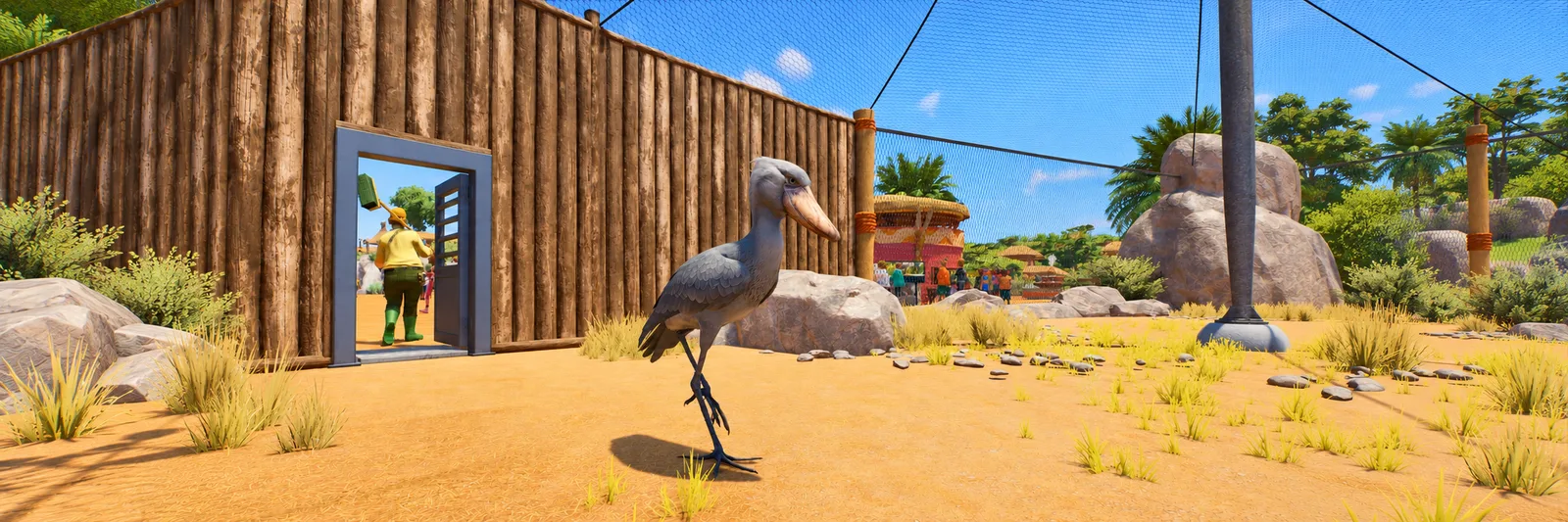
- ShoebillReserves: Great Rift Valley, TanzaniaGroups: Female Bachelor Herd, Solitary Male, Breeding Partners
- SiamangTerrestrialReserves: SumatraGroups: Mixed Group, Breeding Partners
- Spotted HyenaTerrestrialReserves: Great Rift Valley, TanzaniaGroups: Mixed Group, Male Bachelor Herd, Breeding Partners
- SpringbokTerrestrialReserves: Great Rift Valley, TanzaniaGroups: Mixed Group
- Sumatran OrangutanTerrestrialReserves: SumatraGroups: Female Bachelor Herd, Solitary Male
- Sumatran TigerTerrestrialReserves: SumatraGroups: Female Bachelor Herd, Solitary Male
- Sun BearTerrestrialReserves: SumatraGroups: Female Bachelor Herd, Solitary Male
- Sunda PangolinTerrestrialReserves: SumatraGroups: Female Bachelor Herd, Solitary Male
- Thomson's GazelleTerrestrialReserves: TanzaniaGroups: Mixed Group, Male Bachelor Herd
- White-Backed VultureReserves: Great Rift Valley, TanzaniaGroups: Mixed Group, Breeding Partners
- White-Tailed Sea-EagleReserves: Scottish Highlands, Sweden, PolandGroups: Breeding Partners
- Wild BoarTerrestrialReserves: Scottish Highlands, Sweden, PolandGroups: Mixed Group, Female Bachelor Herd, Solitary Male
Reserves and group types are the ones each animal's official Zoopedia entry lists under Conservation. The entries do not give group sizes.
What a release group is
Animals leave your zoo for a Wildlife Reserve as a release group. Frontier says the groups range from single animals to breeding pairs and larger groups, depending on the species, and that a group has to meet requirements such as longevity, fertility and genetic diversity. The Zoopedia names six group types. The names fit Frontier's description, from a Solitary Male or Solitary Female to Breeding Partners and the larger Mixed Group and Bachelor Herds, but the Zoopedia lists only the names, not how many animals each group holds, so we do not add sizes here.
| Release group type | Species that list it |
|---|---|
| Mixed Group | 64 |
| Solitary Male | 49 |
| Female Bachelor Herd | 36 |
| Breeding Partners | 30 |
| Solitary Female | 18 |
| Male Bachelor Herd | 16 |
Most species list more than one type, so the numbers add up to more than the 104 species with release groups.
The six Wildlife Reserves and their animals
These are the reserves the animal entries name, with every species that lists each one. 37 animals can go to more than one reserve, among them 20 of the 29 grassland animals, which list both African reserves.
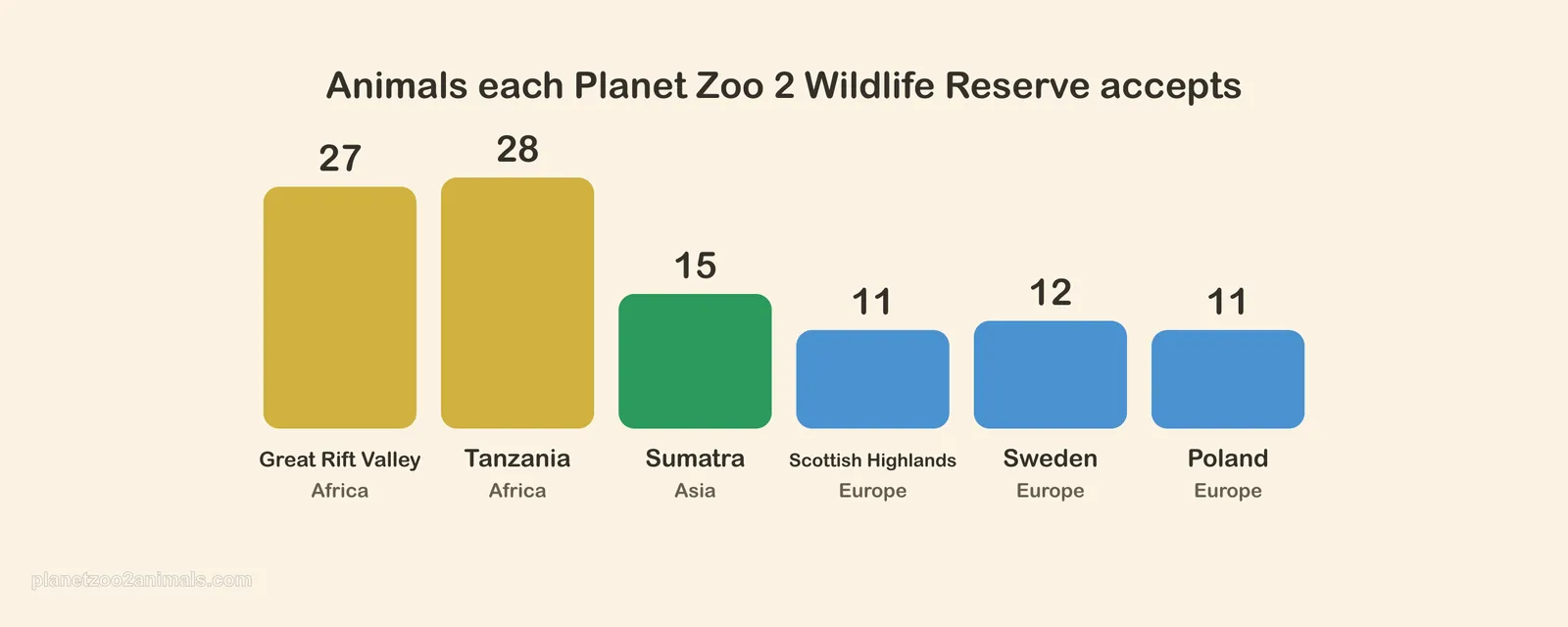
Great Rift Valley Reserve (Africa): 27 animals
Aardvark, African Leopard, African Savannah Elephant, African Tigerfish, African Wild Dog, Black Rhinoceros, Black Wildebeest, Blue Wildebeest, Blunthead Cichlid, Cape Buffalo, Common Hippopotamus, Common Warthog, Gemsbok, Greater Flamingo, Lion, Masai Giraffe, Meerkat, Nile Monitor, Nyala, Plains Zebra, Reticulated Giraffe, Sable Antelope, Secretarybird, Shoebill, Spotted Hyena, Springbok and White-Backed Vulture.
Tanzania Reserve (Africa): 28 animals
Aardvark, African Leopard, African Savannah Elephant, African Tigerfish, African Wild Dog, Black Rhinoceros, Black Wildebeest, Blue Wildebeest, Blunthead Cichlid, Cape Buffalo, Common Hippopotamus, Common Ostrich, Common Warthog, Gemsbok, Greater Flamingo, Lion, Masai Giraffe, Nile Monitor, Nyala, Plains Zebra, Reticulated Giraffe, Sable Antelope, Secretarybird, Shoebill, Spotted Hyena, Springbok, Thomson's Gazelle and White-Backed Vulture.
Sumatra Reserve (Asia): 15 animals
Asian Elephant, Asian Small-Clawed Otter, Binturong, Clown Loach, Giant Gourami, Great Hornbill, Long-Tailed Parakeet, Malayan Tapir, North Sulawesi Babirusa, Saltwater Crocodile, Siamang, Sumatran Orangutan, Sumatran Tiger, Sun Bear and Sunda Pangolin.
Scottish Highlands (Europe): 11 animals
Brown Trout, Common Rudd, Eurasian Beaver, Eurasian Lynx, Golden Eagle, Grey Wolf, Long-Eared Owl, Mountain Hare, Red Deer, White-Tailed Sea-Eagle and Wild Boar.
Sweden Reserve (Europe): 12 animals
Brown Trout, Common Rudd, Eurasian Beaver, Eurasian Brown Bear, Eurasian Lynx, Golden Eagle, Grey Wolf, Long-Eared Owl, Mountain Hare, Red Deer, White-Tailed Sea-Eagle and Wild Boar.
Poland Reserve (Europe): 11 animals
Brown Trout, Common Rudd, Eurasian Beaver, Eurasian Bittern, European Bison, Golden Eagle, Grey Wolf, Long-Eared Owl, Red Deer, White-Tailed Sea-Eagle and Wild Boar.
Fish and birds you can release
Reserves are not only for land animals. Six water animals list a reserve: African Tigerfish, Blunthead Cichlid, Brown Trout, Clown Loach, Common Rudd and Giant Gourami, all fish of the Lakes and Rivers biome. Ten of the twelve aviary birds list one too: Eurasian Bittern, Golden Eagle, Great Hornbill, Greater Flamingo, Long-Eared Owl, Long-Tailed Parakeet, Secretarybird, Shoebill, White-Backed Vulture and White-Tailed Sea-Eagle. Every reef and open-sea animal, including the sharks, the rays, the Hawksbill Turtle and the West Indian Manatee, lists release group types but no reserve. How much flying space the birds need in your zoo first is on the Planet Zoo 2 flyable area page.
Animals with no reserve listed
These 46 species list release group types, but their entries name no reserve: African Penguin, Blackspotted Puffer, Blacktip Reef Shark, Blue and Gold Fusilier, Bluespine Unicornfish, Boeseman's Rainbowfish, Clown Anemonefish, Clown Triggerfish, Dolphinfish, Galápagos Giant Tortoise, Gharial, Giant Grouper, Giant Panda, Golden Lion Tamarin, Golden Trevally, Goodfellow's Tree-Kangaroo, Great Hammerhead, Grizzly Bear, Hawksbill Turtle, Humphead Wrasse, Indian Ocean Oriental Sweetlips, Indo-Pacific Leopard Shark, Indo-Pacific Sergeant, Javan Green Magpie, Javanese Cownose Ray, Komodo Dragon, Longfin Batfish, Ocean Sunfish, Ocellated Eagle Ray, Pacific Bluefin Tuna, Pacific Sardine, Palette Surgeonfish, Przewalski's Horse, Red Lionfish, Red Panda, Ring-Tailed Lemur, Sailfin Snapper, Sand Tiger Shark, Schooling Bannerfish, Snow Leopard, Threespot Damselfish, Toco Toucan, West Indian Manatee, Western Chimpanzee, Western Lowland Gorilla and Yellow Tang. Frontier's help page says only species that have a suitable Wildlife Reserve can be released, so as of October 19, 2026 there is no reserve to send them to.
Animals without release information
The entries of 32 species show neither a reserve nor a release group type: the 30 exhibit animals, from insects and spiders to frogs and snakes, plus the Bactrian Camel and Koi. Want to know what else a species needs? The Planet Zoo 2 Zoopedia guide shows each animal's habitat and biomes, and the habitat planner compares the checked space and temperature of the animals you choose.
Planet Zoo 2 release group questions
What are release groups in Planet Zoo 2?
Release groups are the animals you send together from your zoo to a Wildlife Reserve. The official Zoopedia names six types: Mixed Group, Breeding Partners, Male Bachelor Herd, Female Bachelor Herd, Solitary Male and Solitary Female. Each species' entry lists the types that are valid for it.
How many Wildlife Reserves are there in Planet Zoo 2?
The animal entries in the official Zoopedia name six reserves as of October 19, 2026: Great Rift Valley Reserve, Tanzania Reserve, Sumatra Reserve, Scottish Highlands, Sweden Reserve and Poland Reserve.
Which animals can go to the Sumatra Reserve?
15 animals as of October 19, 2026: the Asian Elephant, Asian Small-Clawed Otter, Binturong, Clown Loach, Giant Gourami, Great Hornbill, Long-Tailed Parakeet, Malayan Tapir, North Sulawesi Babirusa, Saltwater Crocodile, Siamang, Sumatran Orangutan, Sumatran Tiger, Sun Bear and Sunda Pangolin.
Can every animal be released in Planet Zoo 2?
No. As of October 19, 2026, 58 of the 136 Zoopedia animals list a Wildlife Reserve. 46 more, including the Giant Panda, Western Lowland Gorilla, Red Panda, Snow Leopard and Komodo Dragon, list release group types but no reserve, and 32, mostly exhibit animals, show no release information.
Can you release a single animal into a reserve?
Only for species whose entry lists a solitary group type: 49 species list Solitary Male and 18 list Solitary Female. Others go as a Mixed Group, Breeding Partners or a Bachelor Herd.
Sources
- Planet Zoo 2 Zoopedia: the Conservation section of each animal entry (official)
- Creature Feature: Wildlife Reserves (official news, 3 September 2026)
- Planet Zoo 2 Help and FAQ: which species can be released (official)
Checked against the official pages on October 19, 2026. The release lists were read from every animal entry on that date; the feature post and the help page were last checked on October 11, 2026. Official information can change.
Continue reading
 Next stepFound your animal’s reserve? Follow the release steps from zoo to wild.Planet Zoo 2 Wildlife Reserves: Release GuideHow releasing animals into Wildlife Reserves works: release groups and their requirements, restoring Ecosystems and building a Research Network.Go there
Related pages
- ContinentsPlanet Zoo 2 Animals by Continent and OceanEvery animal sorted by the continents and oceans it lives in, with a picker for planning a themed zoo.
 Habitat PlannerPlanet Zoo 2 Habitat Planner & CompatibilityCompare animal counts, checked space, shared temperature and barriers; see official relationship records and save your plan.

Card pictures: AI-edited game image: Planet Zoo 2 © Frontier Developments · Processed screenshot: Planet Zoo 2 © Frontier Developments